Exploring Culture
Toronto’s cultural landscape offers an extraordinary tapestry of experiences, from world-class art institutions and Indigenous heritage to historic architecture that tells stories of economic transformation. For both visitors and residents, navigating this rich ecosystem can feel overwhelming. Where do you begin when faced with choices between major museums and independent galleries? How do you engage respectfully with Indigenous culture? What makes a cultural membership worthwhile, and how do you start collecting art without requiring significant financial resources?
Understanding how to explore culture intentionally transforms passive observation into meaningful engagement. This comprehensive resource connects the practical aspects of art acquisition, institutional memberships, Indigenous cultural protocols, gallery navigation, and architectural exploration. Whether you’re visiting Toronto for the first time or seeking to deepen your relationship with the city’s cultural offerings, these insights will help you move beyond tourist checklists toward genuine cultural literacy.
Starting Your Art Collection Journey
Building an art collection doesn’t require wealth or extensive expertise. The Toronto art scene welcomes emerging collectors with accessible entry points, from affordable prints to young artist showcases. Understanding the fundamental differences between acquisition channels and artwork types empowers you to make confident decisions aligned with your budget and aesthetic preferences.
Understanding Value: Prints, Originals, and Investment
The distinction between original artworks and prints significantly impacts both price and long-term value. An original painting or drawing represents a unique object created directly by the artist, while prints exist in multiples—though limited edition prints signed by artists retain considerable value. Edition size matters: a print numbered 15/50 comes from a series of fifty, affecting scarcity and price.
Toronto galleries like Spacing or smaller Queen West venues often feature affordable prints from established artists, with prices ranging from several hundred to a few thousand dollars. Original works from emerging artists at graduate shows from OCAD University provide another accessible entry point. Consider your primary motivation: if you’re drawn to specific imagery or supporting an artist, prints offer affordability. If uniqueness and potential appreciation matter more, prioritize originals from artists showing momentum in their careers.
Navigating Acquisition Channels and Art Fairs
Toronto offers multiple channels for acquiring art, each with distinct advantages:
- Art fairs like The Artist Project or Toronto Outdoor Art Fair concentrate dozens of artists in one space, facilitating comparison and direct artist conversations
- Commercial galleries provide curation and expertise but typically include markup reflecting overhead costs
- Artist studios during open studio events (Artscape Distillery, Leslieville studios) eliminate intermediaries and offer relationship-building opportunities
- Online platforms expand access but require careful authentication verification
First-time fair attendees should arrive early for best selection, bring measurements of intended display spaces, and request artist contact information for future purchases. Many artists offer payment plans, making larger investments manageable.
Framing and Displaying in Small Urban Spaces
Toronto’s prevalence of condominiums and compact apartments necessitates strategic display decisions. Professional framing represents a significant cost—often matching or exceeding the artwork price for pieces under a few hundred dollars. Queen Street framing shops provide custom options, while stores like Ikea offer standardized sizes at lower price points if you can adapt artwork dimensions.
In small spaces, consider creating a gallery wall rather than dispersing individual pieces, which fragments visual impact. Lean larger unframed canvases on mantels or shelving rather than creating wall holes in rental units. Track lighting or picture lights dramatically enhance artwork visibility in Toronto’s often dim winter light conditions. Avoid hanging valuable pieces in direct sunlight, particularly problematic in south-facing units, as UV exposure causes irreversible fading.
Making the Most of Cultural Memberships
Cultural institution memberships transform from expenses into investments when you understand their full scope of benefits. Toronto’s major museums offer membership structures that extend far beyond admission, particularly valuable for families or frequent visitors.
Hidden Benefits Beyond Free Admission
While unlimited admission provides obvious value—a ROM family membership pays for itself in roughly three visits at current rates—secondary benefits often prove equally valuable. Members-only exhibition previews offer quieter, more contemplative viewing before public crowds arrive. Many institutions, including the AGO, provide reciprocal admission to hundreds of museums across North America through networks like NARM (North American Reciprocal Museums Association), effectively giving you free access during travel.
Additional perks frequently include:
- Priority registration for popular programs and workshops
- Discounts at museum restaurants and shops (typically 10-20%)
- Free or reduced guest passes
- Members-only events with curators or artists
- Specialized programming like lecture series or behind-the-scenes tours
The Gardiner Museum’s membership, for instance, includes access to clay studios and pottery workshops, adding participatory value beyond viewing collections.
Strategic Planning for Museum Visits
Maximizing membership value requires intentional timing and navigation strategies. Visiting during off-peak hours—weekday mornings or Friday evenings—dramatically improves the experience by reducing crowding. Many Toronto institutions keep late hours on specific evenings, offering different atmospheric qualities with reduced family traffic.
Museum restaurants and cafés typically charge premium prices reflecting captive audiences. Members saving 10-20% on food makes the occasional museum café lunch more palatable, but bringing snacks for children or planning meals outside the institution stretches membership value further. The ROM’s street-level exit allows hand-stamp re-entry, enabling lunch at nearby Koreatown restaurants before returning to complete your visit.
Efficient navigation means selecting focus areas rather than attempting comprehensive visits. Identify specific exhibitions or collection areas aligned with your interests, spend substantive time with fewer objects, and recognize that returning multiple times as a member removes pressure to “see everything” in one exhausting marathon.
Engaging with Indigenous Culture Respectfully
Toronto sits on the traditional territory of many nations, including the Mississaugas of the Credit, the Anishinaabeg, the Haudenosaunee, and the Wendat peoples. Engaging with Indigenous culture here requires moving beyond tokenism toward genuine respect, education, and economic support for Indigenous communities.
Supporting Authentic Indigenous Artists
The market contains significant volumes of inauthentic Indigenous art—mass-produced items falsely marketed as Indigenous-made. Supporting genuine Indigenous artists requires verification and intentionality. Reputable Toronto venues like Native Canadian Centre of Toronto, Urban Shaman Gallery, or AGO’s Indigenous art department ensure authenticity.
When purchasing directly, inquire about the artist’s community and nation affiliation. Legitimate Indigenous artists typically share this information proudly as it connects their work to specific cultural traditions and knowledge systems. Price points reflecting fair compensation for skilled work indicate authenticity—extremely cheap “Indigenous-style” items raise red flags.
Beyond visual art, Toronto offers Indigenous food experiences that support community entrepreneurs. Restaurants like NishDish or seasonal Indigenous food markets provide culinary engagement that directly benefits Indigenous chefs and food sovereignty initiatives. These experiences educate palates while supporting economic self-determination.
Understanding Land Acknowledgments and Cultural Protocols
Land acknowledgments have become standard practice at Toronto cultural events and institutions, but their purpose extends beyond rote recitation. These acknowledgments recognize ongoing Indigenous presence and rights to territories that were never legally ceded through treaties. Understanding the specific nations named—and recognizing this as contemporary reality rather than historical footnote—demonstrates genuine respect.
Cultural protocols around Indigenous art and spaces include avoiding offensive terminology. Terms like “primitive” or “artifact” when discussing contemporary Indigenous art perpetuate colonial frameworks. Instead, use “artwork,” “cultural objects,” or terms preferred by specific communities. Photography restrictions in certain ceremonial contexts or around specific objects should be respected without question.
Seeking learning opportunities means approaching Indigenous cultural engagement with humility rather than entitlement. Many Toronto institutions offer Indigenous-led tours, workshops, or talks that center Indigenous voices and knowledge systems. These programs provide appropriate contexts that self-directed learning cannot replicate. The AGO’s Indigenous tours, for example, reframe familiar collections through Indigenous curatorial perspectives, revealing how presentation choices shape understanding.
Mastering the Museum and Gallery Experience
Museums and galleries function as carefully constructed intellectual and physical spaces. Understanding curatorial intent, institutional differences, and strategies for meaningful engagement transforms these visits from checkbox tourism into genuine cultural encounters.
Understanding Curatorial Intent and Space Design
Curators make deliberate decisions about which artworks appear together, their sequencing, lighting, and contextual information provided. Exhibition design guides your movement and attention—wide-open spaces in contemporary galleries like the Power Plant encourage circular browsing, while linear pathways in historical exhibitions at the ROM create narrative progression.
Reading wall texts and didactic panels provides curatorial framing, but also consider what’s absent. Which artists, communities, or perspectives receive space and which are marginalized? Contemporary museums increasingly acknowledge these gaps—the AGO’s reinstallation of Canadian and Indigenous galleries explicitly addresses previous exclusions.
Interactive art installations, increasingly common in Toronto venues like the Aga Khan Museum or smaller contemporary spaces, require different engagement protocols. These works invite physical interaction—touching, moving through, or activating elements. Overcoming hesitation to participate fully realizes the artist’s vision. If uncertain whether interaction is permitted, ask staff rather than assuming hands-off museum conventions apply universally.
Large institutions like the AGO or ROM offer breadth and resources—blockbuster exhibitions, comprehensive collections, extensive programming. Independent galleries like Mercer Union or Cooper Cole provide intimacy, risk-taking, and emerging artist focus. Both play essential roles. Rotating between institutional types prevents cultural diet monotony and exposes you to different curatorial philosophies.
Preventing Museum Fatigue and Enhancing Retention
Museum fatigue—that glazed overwhelm when everything blurs together—plagues even enthusiastic culture seekers. Physical exhaustion from standing and sensory overload from visual stimulation both contribute. Strategic countermeasures preserve energy and enhance memory retention.
Limit your focus to specific galleries or themes rather than attempting comprehensive coverage. Spending thirty minutes deeply engaging with ten objects proves more rewarding than glancing at two hundred. Use seating when available—many Toronto museums provide benches specifically for contemplative viewing. The AGO’s Galleria Italia offers spectacular seating with northern light, ideal for mid-visit restoration.
Post-visit discussion, whether with companions or through personal journaling, significantly improves retention. Toronto’s museum cafés or nearby coffee shops provide natural decompression spaces. Discussing favorite pieces, surprising discoveries, or confusing elements helps consolidate memory and process reactions. Taking selective photographs of artwork labels alongside images helps later recollection, though prioritize present-moment viewing over phone-mediated experience.
Discovering Stories in Historic Architecture
Toronto’s built environment narrates economic, social, and cultural transformation. Learning to read architectural styles and research building histories adds depth to neighborhood exploration, revealing how financial power, immigration patterns, and technological change shaped the contemporary city.
Reading Economic and Social History in Buildings
Architectural grandeur often reflects specific economic moments. Casa Loma’s excessive early-twentieth-century opulence demonstrates pre-income-tax wealth accumulation and industrialist hubris shortly before financial collapse. The financial district’s early skyscrapers from the 1920s-30s showcase Canadian banking power and Art Deco aesthetic ambition. Recognizing these connections transforms buildings from mere backdrop into historical evidence.
Architectural styles provide dating clues and cultural context. Victorian-era row houses in Cabbagetown display ornamental brickwork reflecting craft traditions and middle-class aspirations. Post-war modernist towers in St. James Town represent specific urban planning philosophies and immigration absorption strategies. Brutalist structures like Robarts Library embody 1970s institutional confidence and material honesty.
Understanding economic context means asking: who financed this construction, who labored on it, and who was excluded? Toronto’s Distillery District preserves industrial architecture from the Gooderham and Worts whiskey empire—massive nineteenth-century wealth built partially on exploitative labor conditions. Contemporary adaptive reuse for boutiques and galleries represents different economic logic entirely.
Self-Guided Exploration Techniques
Researching building histories before neighborhood walks enriches real-time observation. Toronto Public Library’s digital archives contain historical photographs, maps, and directories. The City of Toronto’s Heritage Property Database identifies designated properties with historical significance and designation reasons. Comparing historical photographs with current conditions reveals alterations, losses, and preservation choices.
During walks, observe architectural details systematically: foundation materials, window styles, roofline ornamentation, entrance design. These elements indicate construction period, building purpose, and status aspirations. Cornerstone dates provide explicit chronological anchors. Plaques from the City of Toronto or Architectural Conservancy of Ontario offer condensed histories, though they sometimes perpetuate myths requiring critical examination.
Common historical myths warrant skepticism. Not every old building housed famous figures or witnessed dramatic events—plaques sometimes stretch connections or ignore contradictory evidence. Cross-reference commemorative claims with archival sources. Heritage narratives often privileged wealthy property owners while ignoring working-class residents or marginalized communities whose stories deserve equal attention.
Self-guided tours benefit from thematic focus—choose specific architectural styles, building types, or historical periods rather than attempting encyclopedic neighborhood coverage. Walking Queen Street West concentrating exclusively on Victorian commercial architecture, for instance, trains observational skills more effectively than unfocused wandering.
Cultural exploration in Toronto rewards intentionality and continuous learning. Whether you’re beginning an art collection, maximizing museum memberships, engaging with Indigenous heritage, navigating gallery spaces, or decoding architectural history, approaching these experiences with curiosity and respect unlocks profound rewards. Start with areas that spark genuine interest, gradually expanding your cultural literacy. The city’s institutions, artists, and historic buildings offer limitless opportunities for those willing to look deeper, ask questions, and engage authentically with the cultural landscape surrounding them.
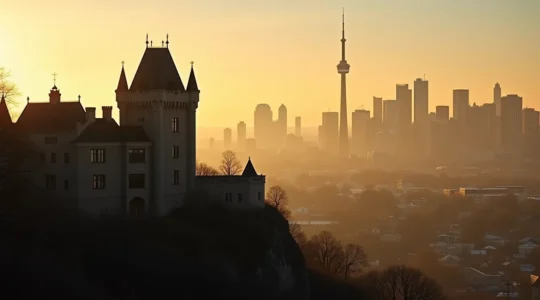
Why Was Casa Loma Seized for Taxes Despite Sir Henry Pellatt’s Wealth?
Sir Henry Pellatt’s loss of Casa Loma was not due to a single mistake but a systemic financial collapse, where his greatest strengths became his fatal weaknesses in post-war Toronto. The end of his electricity monopoly and a post-war recession…
Read more
Understanding Contemporary Art: How to Navigate MOCA Without Feeling Lost?
In summary: Instead of trying to “understand” art, focus on your personal, emotional reaction first. Combat gallery fatigue with a clear pacing strategy: start at the top, take planned breaks, and focus on one “anchor piece” per floor. Use feeling-based…
Read more
Experiencing Indigenous Culture in Toronto: How to Support Authentic Artisans?
To truly support Indigenous creators in Toronto, your engagement must be based on informed participation, not just a simple purchase. Authentic art has distinct markers that separate it from mass-produced fakes, and buying it is an act of economic reconciliation….
Read more
ROM Membership: When Does It Actually Pay Off for a Family of 3?
A ROM membership for a family of three breaks even on the third visit, but its true financial value lies in avoiding hidden costs and leveraging exclusive logistical perks. The membership’s cost is recovered faster when accounting for included special…
Read more
Buying Local Art in Toronto: How to Start a Collection on a $500 Budget?
Starting a meaningful art collection in Toronto on a budget isn’t about finding ‘cheap’ art; it’s about making smart, strategic decisions that build real value. Focus on acquiring limited edition prints from local artists, which offer proven scarcity and archival…
Read more