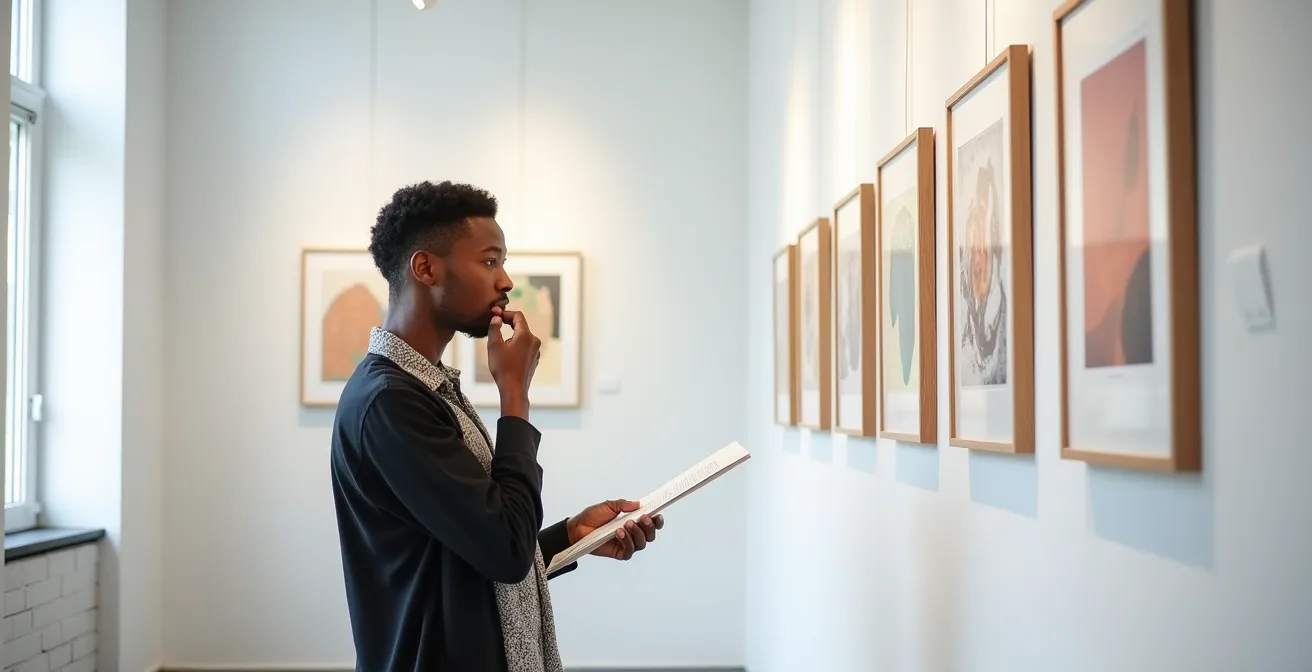
Starting a meaningful art collection in Toronto on a budget isn’t about finding ‘cheap’ art; it’s about making smart, strategic decisions that build real value.
- Focus on acquiring limited edition prints from local artists, which offer proven scarcity and archival quality that posters lack.
- Use tactical approaches at events like the Toronto Outdoor Art Fair to find emerging talent and negotiate better prices.
Recommendation: Shift your mindset from ‘decorating’ to ‘investing’. Your first $500 purchase can be a genuine asset that appreciates in value and personal meaning, kickstarting your journey as a confident collector.
You’ve finally got your own space in Toronto—a condo with perfectly blank walls just waiting for personality. You scroll through design feeds filled with stunning, original art and feel a pang of inspiration, quickly followed by a wave of intimidation. The formal galleries on Yorkville seem out of reach, and the thought of navigating the art world feels like you need a secret password. Many people in your position default to mass-produced posters or generic prints from big-box stores, thinking that’s all a modest budget can afford. They might tell you to “just buy what you love,” but that advice falls flat when you don’t even know where to start looking or how to tell if you’re making a good choice.
But what if the key to starting a collection wasn’t about having a huge budget, but about having the right strategy? What if you could use your $500 not just to cover a wall, but to acquire a genuine asset, support a local Toronto artist, and begin building your own “Collector’s IQ”? This is entirely possible. The secret lies in understanding the hidden rules of the Toronto art scene—knowing why a limited edition print is a smarter buy, how to find gems at a bustling art fair, and how to protect your new piece from the city’s notorious summer humidity.
This guide is designed to be your inside consultant. We’ll move beyond the generic advice and give you the specific, actionable knowledge to transform you from a hesitant onlooker into a savvy, confident art buyer. We’ll break down where to look, what questions to ask, and how to ensure your first piece of art is something you not only love, but that also holds its value. Your journey to becoming a Toronto art collector starts here.
To help you navigate this exciting process, we’ve structured this guide to walk you through every critical decision, from your first purchase to displaying it proudly in your home. Discover the strategies that seasoned collectors use to build impressive collections on a realistic budget.
Summary: Your Guide to Starting a Toronto Art Collection
- Why is a Limited Edition Print a Smarter Investment Than a Poster?
- How to Navigate the Toronto Outdoor Art Fair to Find Hidden Gems?
- Gallery vs. Instagram Direct: Where Do You Get Better Prices from Artists?
- The Framing Mistake That Destroys Art in Humid Toronto Summers
- How to Create a Gallery Wall in a Rental Apartment Without Damaging Paint?
- MOCA vs. The Power Plant: Which Gallery is More Beginner-Friendly?
- Vintage on Queen vs. New Local Design: Which Has a Lower Carbon Footprint?
- Understanding Contemporary Art: How to Navigate MOCA Without Feeling Lost?
Why is a Limited Edition Print a Smarter Investment Than a Poster?
The first step in building your “Collector’s IQ” is understanding the fundamental difference between a decorative item and an art asset. A poster, even a beautiful one, is a mass-produced replica with virtually no long-term value. A limited edition print, however, is an original work of art, created in a fixed number by the artist. This principle of strategic scarcity is the cornerstone of art value. While a poster’s ink may fade in 5-10 years, a limited edition is made with archival materials designed to last over a century.
Think of it this way: buying a poster is like buying a photocopy of a novel’s first page. Buying a limited edition print is like buying one of a small number of copies signed and numbered by the author. The artist’s signature and the edition number (e.g., 12/50) provide provenance and guarantee its rarity. As the artist’s career grows, the value of these early, scarce works can increase significantly. For a new collector, this is the most intelligent way to enter the market, as it provides both aesthetic enjoyment and potential financial appreciation.
Case Study: Open Studio Toronto’s Archive Collection
A perfect example of this principle in action is Open Studio’s Archive Collection, which features rare limited edition prints from some of Canada’s most celebrated artists like General Idea and Janet Cardiff. Many of these works were created early in their careers when they were still emerging. What was once an affordable print from a promising local artist can become a valuable and historically significant piece, demonstrating how your $500 investment today can grow into a cherished collectible.
When you buy a limited edition, you’re not just buying an image; you’re buying a piece of an artist’s career. You’re making a calculated investment in scarcity and quality, turning your wall decoration into a genuine art asset from day one.
How to Navigate the Toronto Outdoor Art Fair to Find Hidden Gems?
The Toronto Outdoor Art Fair (TOAF) at Nathan Phillips Square can feel overwhelming. With hundreds of booths and massive crowds, it’s easy to get lost or feel pressured. But for a savvy new collector, it’s a goldmine. The fair is a major event in the city’s art calendar; TOAF data shows it brings together 150,000 art lovers who spend over $2 million. Your goal isn’t to see everything, but to navigate it strategically to find exceptional pieces within your $500 budget.
Forget wandering aimlessly. The key is to have a plan. The most exciting opportunities are often found with emerging artists who are eager to build a collector base. These artists are typically located in specific zones or at the less-trafficked edges of the fair. Going on the final day is a classic collector’s tactic. Artists are often more willing to negotiate prices on Sunday afternoon rather than pack up and transport all their remaining work back to the studio. Building a personal connection can also make a difference. Instead of just asking about the price, ask about the inspiration behind the piece, particularly if it relates to a Toronto neighbourhood. This builds rapport and shows genuine interest, which can often lead to a better price or an invitation to a future studio visit.

The best strategy is to embrace the hunt. Look for the recent graduates, explore the periphery, and time your visit to your advantage. This turns the fair from a chaotic marketplace into your personal treasure map.
Your Sunday Strategy for the Toronto Outdoor Art Fair
- Target the Student Zone: Focus your initial search on booths featuring graduates from OCAD U and York University. These emerging artists often price their work under $500 to establish their careers.
- Explore the Edges: Visit the peripheral booths at the far ends of Nathan Phillips Square. Foot traffic is lower here, and artists may be more open to conversation and negotiation.
- Time Your Visit: Arrive on Sunday between 3 p.m. and 5 p.m. This is the “magic window” when artists are often motivated to sell remaining pieces at a discount.
- Build Rapport: Ask specific, thoughtful questions like “What Toronto neighbourhood inspired this piece?” to create a connection and potentially unlock more favorable “studio” pricing.
Gallery vs. Instagram Direct: Where Do You Get Better Prices from Artists?
Once you’ve identified an artist you like, you’ll face a common dilemma: should you buy from a gallery, or approach the artist directly through a channel like Instagram? Understanding the pros and cons of each is crucial for a budget-conscious collector. A gallery provides an invaluable service: they curate, authenticate, and handle the logistics. However, this service comes at a price. A gallery typically takes a 50% commission, which is factored into the artwork’s final cost. For you, this means a higher price tag.
Buying directly from an artist, often through Instagram DMs or a studio visit, cuts out the middleman. This can result in significantly lower prices and allows you to build a direct relationship with the creator. This connection adds a story and provenance to your piece that a gallery purchase can’t replicate. However, this route carries its own risks: you’re responsible for verifying authenticity, and you won’t have a formal return policy. For a new collector, a hybrid model can be the perfect solution. Platforms are emerging that bridge this gap, offering the security of a curated marketplace with the direct-from-artist pricing you’re looking for.
The table below breaks down the key differences to help you make an informed decision. As you can see, a direct studio visit often offers the best of both worlds—price negotiation and personal connection.
This comparative analysis, based on trends observed in the Toronto art market, highlights the trade-offs you’ll navigate as a collector. Platforms like Partial Gallery are changing the game by offering rent-to-buy options, as noted in a recent overview of Toronto’s art buying scene. This model lets you live with a piece before committing, a fantastic option for a first-time buyer.
| Purchase Channel | Typical Price Range | Advantages | Risks |
|---|---|---|---|
| Established Gallery | $200-$2500 (includes 50% commission) | Professional curation, authenticity guaranteed, return policy | Higher prices due to gallery overhead |
| Instagram Direct | $100-$1500 (no commission) | Direct artist relationship, studio visit opportunities, flexible payment | No formal authentication, shipping risks |
| Studio Visit | $100-$1000 (negotiable) | See work in person, understand artist’s process, best prices | Requires scheduling, no immediate availability |
The Framing Mistake That Destroys Art in Humid Toronto Summers
You’ve successfully acquired your first piece of original art. Now comes a step that many new collectors overlook: framing. In Toronto, this isn’t just about aesthetics; it’s about preservation. The city’s humid summers, influenced by Lake Ontario, can be brutal on artwork. Trapped moisture can cause prints to ripple, warp, or develop “foxing”—those ugly brown spots that permanently damage paper. The single biggest mistake a new collector can make is choosing a cheap, non-archival frame that seals in this damaging humidity.
Proper framing is your art’s insurance policy. It’s a non-negotiable part of your investment. This means using materials specifically designed to protect against environmental damage. The glass or acrylic should have UV-filtering properties to prevent colours from fading. Most importantly, there must be a barrier between the art and the glass. Spacers or an acid-free mat create a small air gap, preventing moisture condensation from directly touching the artwork’s surface. Finally, the mat and backing board must be 100% acid-free. Standard paper products contain acids that react with humidity and will slowly yellow and degrade your art from the inside out.
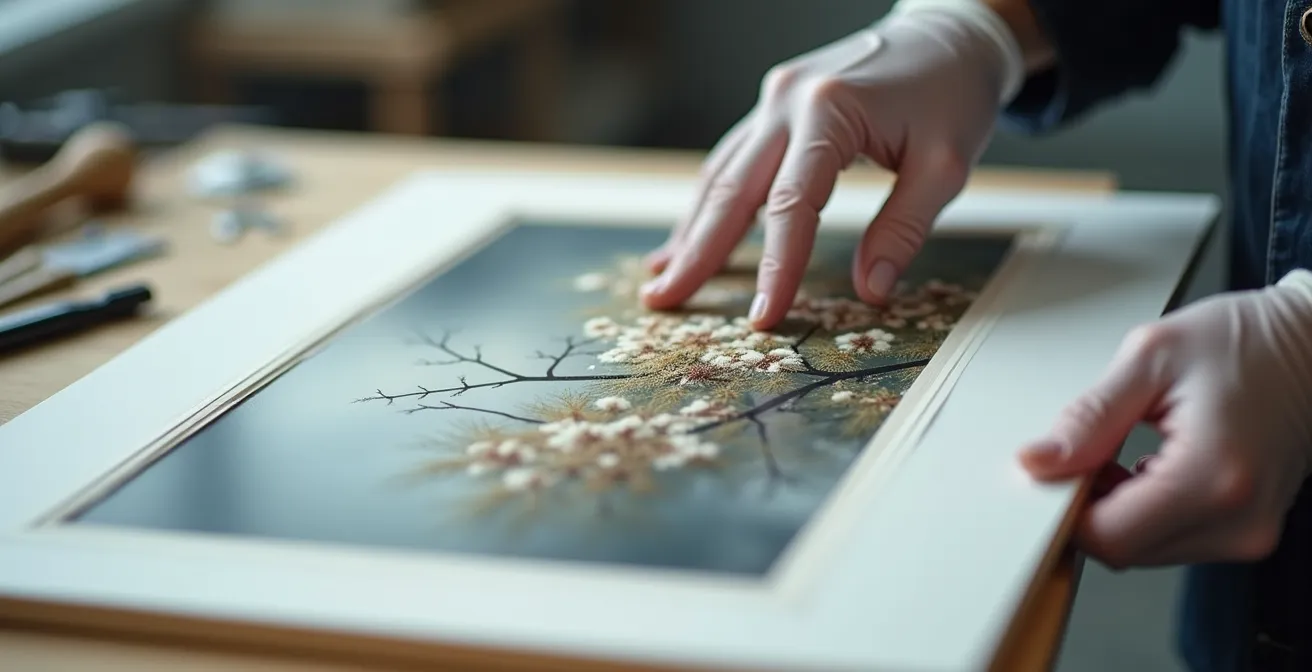
As the experts at a local framing studio emphasize, the right frame is a shield. According to the team at Akasha Art Projects, a Toronto-based custom framer:
“Proper framing offers protection against damaging light sources, airborne pollutants, fading, moisture, and harmful acidic materials. Our experienced team can guide you to the framing solution that suits the needs and budget of every project”
– Akasha Art Projects, Custom Framing Services Toronto
Investing an extra $100-$150 in archival framing might seem like a lot, but it will protect your $500 art asset for a lifetime. Skimping on the frame is the fastest way to destroy your investment.
How to Create a Gallery Wall in a Rental Apartment Without Damaging Paint?
For many young professionals in Toronto, “home” is a rental condo with a strict landlord and even stricter rules about wall damage. The dream of a sophisticated gallery wall can seem impossible when you’re worried about losing your security deposit over a few nail holes. Fortunately, creating a stunning art display without leaving a trace is entirely achievable with a few professional techniques. The key is to think beyond the traditional nail and hammer.
The most elegant and versatile solution is a picture rail system. This involves installing a single, slim track along the top of your wall, which may require only three or four small screw holes that are easily patched later. From this rail, you can hang wires or transparent cords, allowing you to adjust, add, or swap out artwork as much as you like without ever making another hole. It’s the system used by actual galleries for a reason: it’s flexible and minimally invasive. Another brilliant method for renters is using floating shelves. By installing one or two shelves, you create a surface where you can lean frames of various sizes, creating a dynamic, layered look with zero damage from the art itself.
While consumer-grade adhesive strips are popular, they can fail under the weight of a framed piece or peel paint in humid conditions. For valuable art, it’s worth investing in professional, museum-quality adhesive hanging systems. These are rated for heavier weights and are designed for clean removal. Before you hang anything, use a virtual placement app like Art Placer to plan your layout digitally. This prevents the ultimate damage: putting holes in the wall only to realize you don’t like the arrangement. These methods empower you to curate your space with confidence, turning your temporary rental into a personalized gallery.
MOCA vs. The Power Plant: Which Gallery is More Beginner-Friendly?
Part of building your “Collector’s IQ” is immersing yourself in art, and Toronto offers world-class contemporary galleries to do just that. For a beginner, two stand out: the Museum of Contemporary Art (MOCA) in the Junction Triangle and The Power Plant at the Harbourfront. Choosing which to visit first can shape your initial experience with contemporary art. While both are fantastic, they offer distinctly different experiences for someone just starting their journey.
The Power Plant is arguably the ultimate zero-risk entry point for a new art enthusiast. Its biggest advantage is that admission is always free. This removes any financial pressure, allowing you to wander in, spend as little or as much time as you like, and simply see what resonates with you without feeling like you need to “get your money’s worth.” Its exhibitions are often thematic and narrative-driven, which can be easier to grasp than more conceptual installations. They also offer excellent free tours and “Sunday Scene” programs where guest speakers discuss the current exhibition, providing an accessible way to learn more.
MOCA, located in a stunningly repurposed industrial building, offers a different kind of energy. While it has an admission fee, its focus is often on cutting-edge, immersive installation art that can be incredibly inspiring. It’s the place to go if you’re curious about what is happening at the absolute forefront of the contemporary art world. MOCA also hosts regular artist talks and guided tours that are fantastic for digging deeper. The best choice depends on your goal: if you want a no-pressure, exploratory first step, start with The Power Plant. If you’re ready to dive into the deep end of the contemporary scene, head to MOCA.
| Feature | MOCA Toronto | The Power Plant |
|---|---|---|
| Location | Junction Triangle (accessible by subway) | Harbourfront (scenic but requires streetcar) |
| Admission | $10-14 regular admission | Always FREE |
| Beginner Programs | Regular artist talks, guided tours | Sunday Scene programs, free tours |
| Exhibition Style | Contemporary installation art, often conceptual | Thematic exhibitions, more narrative-driven |
| Best For Beginners | Those interested in cutting-edge contemporary art | First-timers wanting risk-free exploration |
Vintage on Queen vs. New Local Design: Which Has a Lower Carbon Footprint?
As a conscious consumer, you might wonder about the environmental impact of your new hobby. When we think of sustainability in art, we often focus on the materials, but the real impact comes from transportation and the local economy. In this context, the most sustainable choice isn’t just about old versus new; it’s about local versus global. Buying a new piece from a Toronto artist who lives and works within a 50km radius has a significantly lower carbon footprint than sourcing a vintage piece that was shipped from overseas.
More importantly, buying directly from a local artist creates a powerful positive feedback loop within Toronto’s creative ecosystem. It’s not just a transaction; it’s a direct investment in the city’s culture. This is known as the local economic multiplier effect. The money you spend doesn’t disappear into a large corporation; it pays for studio rent at a place like 401 Richmond, buys supplies from local shops like Above Ground Art Supplies, and is spent at neighbourhood cafes and businesses. This strengthens the entire creative community, ensuring that Toronto remains a vibrant place for artists to live and work.
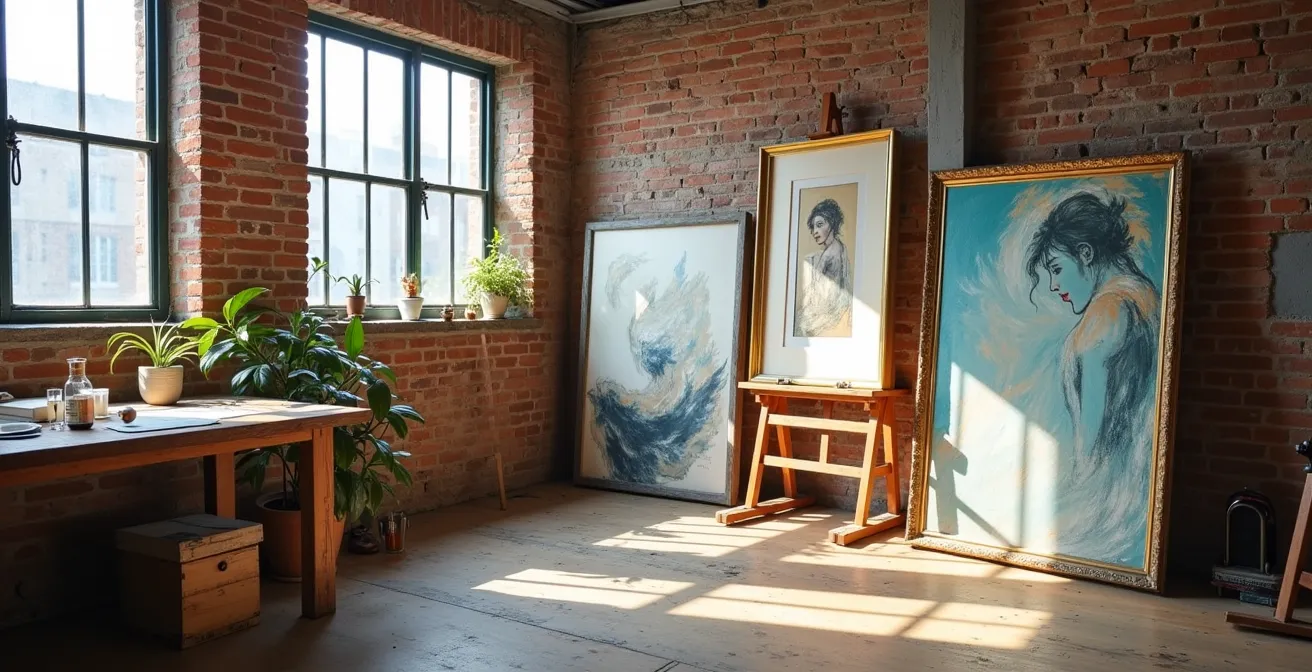
You can amplify this positive impact by making other sustainable choices. Pair your new, locally-made artwork with a vintage frame sourced from a shop on Queen West. This practice of circularity—giving an old object new life—is both stylish and eco-friendly. When buying prints, look for artists who use water-based inks and recycled papers. By focusing your purchasing power locally, you’re not just reducing your carbon footprint; you’re actively cultivating the very creative culture you seek to enjoy.
Sustainable Art Collecting Checklist for Toronto
- Prioritize Proximity: Favour new works from Toronto-based artists to dramatically reduce transportation emissions.
- Embrace Vintage Frames: Source unique, pre-loved frames from Queen West shops like Black Bird Vintage to give existing materials a second life.
- Check the Ink and Paper: When buying prints, choose local printmakers who use sustainable materials like water-based inks and recycled papers.
- Support Collectives: Buy from artists who work in shared studio spaces, as this reduces the collective carbon footprint through shared resources.
Key Takeaways
- Think Like an Investor: Prioritize limited edition prints over posters to acquire an asset with proven scarcity and archival quality.
- Be Strategic at Fairs: Use targeted tactics, like visiting on a Sunday afternoon and focusing on student zones, to find the best deals at events like TOAF.
- Frame for Preservation: Always invest in archival, UV-filtering framing with spacers to protect your art from Toronto’s specific climate challenges.
Understanding Contemporary Art: How to Navigate MOCA Without Feeling Lost?
You’ve taken the plunge and are standing in a gallery like MOCA, staring at a piece of contemporary art. There’s no descriptive plaque, just a title, and you feel that familiar sense of “I don’t get it.” This is the final hurdle for many new collectors: the fear of not understanding. The great secret of the art world is that there is often no single “correct” interpretation. Art is a conversation, and your personal response is a valid and vital part of that dialogue. The goal isn’t to guess the artist’s exact intention, but to build your own connection to the work.
To do this, you can use a simple but powerful technique called the “One-Minute Art School” method. It’s a three-step process that helps you engage with any piece of art without needing a PhD in art history. It grounds your observation in what’s physically there before moving on to interpretation. This simple framework breaks down the intimidating task of “understanding art” into manageable steps, empowering you to form your own opinions with confidence. It transforms you from a passive viewer into an active participant.
This confidence is the most valuable tool a collector can have. As Toronto gallery owner Craig D’Arville stated in an interview with The Globe and Mail, your personal perspective is what matters most.
“Have confidence that your interpretation of what constitutes art is valid. With that philosophy you can begin to start to build a collection that is meaningful to you”
– Craig D’Arville, Co-owner of Ffoto Gallery
Your Action Plan: The One-Minute Art School Method
- Describe (20 seconds): Start by simply listing what you literally see. Forget meaning. What colors, shapes, materials, and textures are present? Is it large or small? Rough or smooth?
- Analyze (20 seconds): Now, consider how the elements are arranged. How is the piece made? Notice the technique, the composition, and the relationship between different parts.
- Interpret (20 seconds): Finally, allow yourself to feel. What emotions or memories does the work evoke in you? What does it make you think about? Your personal connection is the most important part.
By using this method, you develop your own eye and your own taste. You learn to trust your instincts, which is the true mark of a confident collector.
Frequently Asked Questions About Art and Toronto Rentals
Can landlords charge for small nail holes in Ontario?
Under the Ontario Standard Lease Agreement, small nail holes are considered ‘reasonable wear and tear’ and cannot be deducted from deposits.
What size holes require repair before move-out?
Holes larger than 1/4 inch diameter or anchor holes from heavy mounting systems typically require patching and painting.
Are picture rails considered permanent modifications?
Picture rails that use minimal mounting points and can be removed without damage are generally acceptable, but always confirm with your landlord first.
You now have the knowledge and the strategy to begin. The Toronto art world is not an exclusive club; it’s a vibrant community waiting for you to join. Take these tools, visit a gallery or an art fair this weekend, and start the conversation. Your first amazing piece is out there waiting for you.