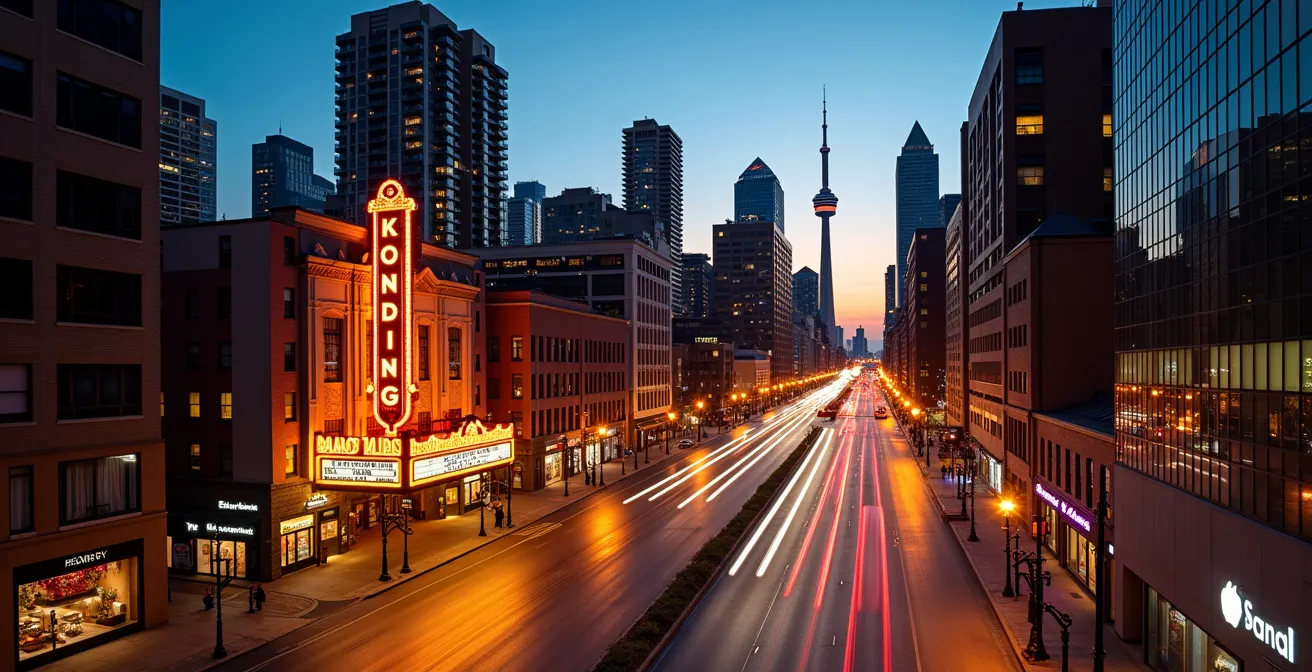
Forget the obvious red flags; spotting a real tourist trap in Toronto’s Entertainment District is about decoding the economic playbook used to separate you from your money.
- “Free” drink tickets are bait for a mandatory cover charge, a classic shell game played on King West.
- A restaurant’s top selling point being its “CN Tower View” is a direct admission of mediocre food.
Recommendation: Treat every offer with suspicion. True quality in the district doesn’t need aggressive promoters or flashy gimmicks; it relies on reputation and, increasingly, a difficult-to-get reservation.
Another Friday night descends on Toronto’s Entertainment District, and the air crackles with a familiar energy—a mix of anticipation and, for the uninitiated, impending financial doom. You’re here for a good time, a great drink, maybe a show. But this neighbourhood is a minefield, expertly engineered to prey on optimism and part you from your wallet with startling efficiency. Everyone knows the generic advice: “check Google reviews,” “avoid places with hawkers outside,” or “if it looks too touristy, it probably is.” This is surface-level thinking for amateurs.
This advice fails because it doesn’t address the core of the problem. The tourist traps here don’t just look like traps; they operate on a sophisticated economic playbook that has become the background noise of the area. They thrive on information asymmetry—knowing you don’t know the real cost of a “free” drink, the difference between good and bad theatre acoustics, or the living hell that is a condo above a Peter Street nightclub. They’ve perfected the art of selling the sizzle with no steak in sight.
But what if the key wasn’t just avoiding the obvious traps, but learning to read the subtle signals of genuine quality? This guide isn’t about where to go; it’s about *how to think*. It’s a crash course in the cynical but necessary mindset of a local. We will dissect the district’s most common hustles, from the promoter’s drink ticket scam to the pre-theatre dining rush, and give you the tools to see past the facade. By understanding the system, you can finally beat it.
This article provides a critical framework for navigating the area’s nightlife and real estate. The following sections break down the specific traps and tactics you’ll encounter, equipping you with the insider knowledge to make discerning choices.
Summary: A Critic’s Guide to Surviving the Entertainment District
- Why Do Promoters Hand Out Free Drink Tickets That Aren’t Really Free?
- How to Find the Hidden Entrances to Toronto’s Best Speakeasies?
- Royal Alexandra vs. Princess of Wales: Which Theatre Has Better Acoustics?
- The Condo Buying Mistake: Living Above a Nightclub on Peter Street
- How to Eat a 3-Course Meal in 45 Minutes Before Curtain Call?
- The Tourist Trap Restaurants That Will Blow Your Lunch Budget
- How to Exit the Mall onto Yonge Street Without Getting Stuck in a Crowd?
- Toronto Dining: How to Snag a Reservation at Michelin Star Spots Last Minute?
Why Do Promoters Hand Out Free Drink Tickets That Aren’t Really Free?
This is the district’s foundational scam, the “Cover Charge Shell Game.” A smiling promoter hands you a ticket for a “free drink” at a nearby club. You feel special, chosen. You’re not. You’re a mark. The promoter’s job is to get bodies through the door, for which they are paid a commission. The “free drink” is the bait, a loss leader designed to obscure the real cost: the cover charge. You’ll arrive at the door, flash your ticket, and be promptly asked for an entry fee.
The economics are simple. The club sacrifices the cost of a single, low-quality well shot (worth maybe $2 wholesale) to secure your guaranteed entry fee. According to industry analysis, the average nightclub cover fee in Toronto ranges between $20 to $30, especially after 11:30 PM. The promoter gets their cut, the club gets a packed house of people who’ve already sunk costs, and you get a watered-down vodka soda for the price of a top-shelf cocktail. A legitimate venue with a quality product doesn’t need to employ street teams; its reputation and ambiance are the draw.
So, how do you spot this trap? First, no reputable bar needs to beg for customers on the sidewalk. Second, always ask the promoter directly: “Is there a cover charge?” Watch them squirm. Third, check the fine print on the ticket. It will almost always have time restrictions (e.g., “valid before 10:30 PM”) designed to get you in early before the venue would naturally fill up. The entire model preys on the naive assumption that “free” means free.
How to Find the Hidden Entrances to Toronto’s Best Speakeasies?
The allure of the speakeasy—a secret bar, a hidden world—is powerful. But the romantic notion of whispering a password into a peephole is mostly a thing of the past in Toronto. Today, “hidden” is less about physical concealment and more about curated exclusivity. The modern speakeasy playbook has evolved; it’s about creating demand through scarcity, managed not by secrecy but by reservation systems and a deliberate lack of signage.
As a case study in this evolution reveals, Toronto’s best “hidden” bars maintain their mystique through controlled access. Instead of unmarked doors in graffiti-covered alleys (though some still play that part), the real barrier to entry is digital. You need to know which app to use (Resy, Tock), who to follow on Instagram for last-minute openings, or whether the bar even accepts walk-ins. The challenge isn’t finding the door; it’s earning the right to open it. The search has moved from the street to your screen.
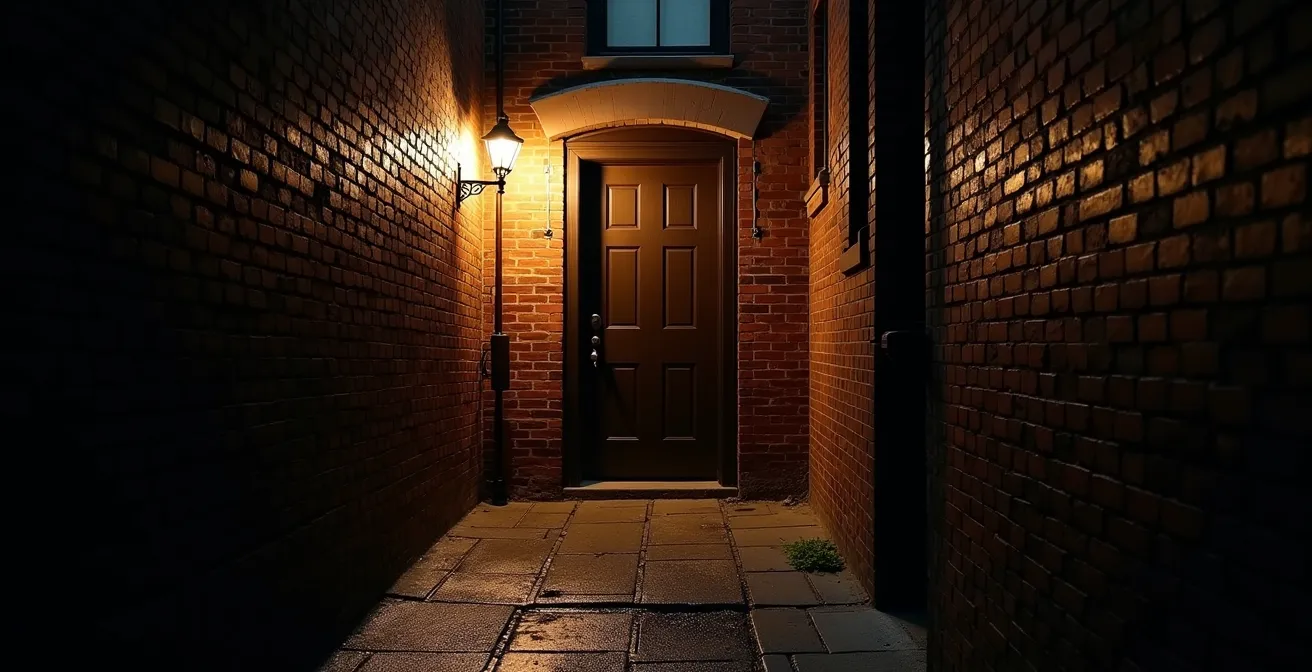
This shift separates the savvy from the tourists. While visitors wander King Street looking for an obvious entrance, locals are setting “notify” alerts on booking platforms. The key is research. Identify the bar you want to visit, then go to their website or social media. Their entry protocol will be spelled out, albeit subtly. Some operate on a first-come, first-served basis for bar seating, rewarding those who arrive 15 minutes before they open. Others release reservations a month in advance at a specific time. Mastering the system is the new password.
Royal Alexandra vs. Princess of Wales: Which Theatre Has Better Acoustics?
Choosing between the Royal Alexandra and the Princess of Wales theatre often comes down to which show is playing. But for the discerning theatre-goer, the venue itself is a critical part of the experience, and their acoustic fingerprints are wildly different. It’s not about which is “better,” but which is *right* for the production. The Royal Alex, a 1907 Beaux-Arts masterpiece, offers a historical warmth, while the Princess of Wales, built in 1993, provides modern clarity.
The Royal Alexandra is a classic proscenium arch theatre. Its design, with ornate plasterwork and plush velvet, creates a warm, resonant sound. This is ideal for classic musicals and dialogue-heavy plays where a rich, enveloping sound adds to the atmosphere. As a historical note, the Wahi Neighbourhood Guide for the Entertainment District mentions, “The Royal Alexandra was North America’s first air-conditioned theatre, and one of the first fireproofed,” a testament to its long history of prioritizing audience experience. The downside? Sound can be less consistent in the far reaches of the balcony. The sweet spot is the front of the Dress Circle (mezzanine).
The Princess of Wales is a modern marvel of acoustic engineering. With 2,000 seats, it was designed for uniform sound distribution. The audio is crisp, clear, and consistent no matter where you sit. This makes it perfect for large-scale, pop/rock musicals like *Les Misérables* or shows with complex soundscapes where every note and lyric must be precise. The sound is less “warm” but more “accurate.” For the absolute best sound, aim for the central orchestra seats around Row J.
This direct comparison shows how the choice of theatre should align with the type of show you’re seeing. The table below breaks down the key differences to help you decide.
| Feature | Royal Alexandra | Princess of Wales |
|---|---|---|
| Acoustic Design | Historic, warm resonance ideal for classic musicals | Modern engineering for clear, uniform sound |
| Best Seats for Sound | Front of Dress Circle (mezzanine) | Central orchestra around Row J |
| Capacity | 1,244 seats | 2,000 seats |
| Built | 1907 (North America’s first air-conditioned theatre) | 1993 |
| Best For | Classic plays and traditional musicals | Dialogue-heavy shows and pop/rock musicals |
The Condo Buying Mistake: Living Above a Nightclub on Peter Street
The ultimate tourist trap isn’t a bar or restaurant; it’s a multi-million dollar condo that sells you a dream of vibrant city living and delivers a nightmare of sleepless nights. The Entertainment District’s residential boom has been staggering; its population exploded from 750 to 7,500 residents between 1996 and 2005, and it has only grown since. This rapid vertical expansion placed luxury glass towers directly on top of the neighbourhood’s throbbing nightlife arteries like Peter Street and Adelaide Street West.
For an unsuspecting buyer, a 15th-floor unit with a view of the skyline seems perfect. What the sales brochure omits is the bone-rattling bass that bleeds through concrete and triple-pane glass at 2 AM every Thursday through Sunday. It’s the sound of shouting crowds, screeching tires, and the perpetual sirens that are the district’s true soundtrack. You’re not buying a home; you’re buying a front-row seat in an asylum. The emotional and financial toll of this mistake is immense, leading to endless noise complaints, battles with condo boards, and a resale value that can suffer once the reality of the location becomes known.

This is where due diligence becomes an act of self-preservation. Falling for the slick marketing of a new development without investigating the ground-level reality is a rookie mistake. Before you even think about making an offer, you must become a detective. The health of your investment—and your sanity—depends on it.
Your Pre-Purchase Investigation Plan: Condo Due Diligence
- Review the condo’s Status Certificate for any history of recurring noise complaints or legal actions against neighbouring establishments.
- Visit the building’s location on a Friday or Saturday night around 1 AM. Stand on the street and listen. This is your future.
- Confirm if the building has mixed residential and commercial zoning, which is a red flag for potential ground-floor chaos.
- Research every commercial tenant on the ground floor and in adjacent buildings. What are their hours? What is their reputation?
- Talk to current residents. Ask them point-blank about noise, crowds, and the building’s management of these issues.
How to Eat a 3-Course Meal in 45 Minutes Before Curtain Call?
The pre-theatre dinner rush is a frantic dance against the clock. You want a civilized meal, but your 8 PM curtain call looms large. Many fall into the trap of either a rushed, stressful meal or grabbing sad, overpriced fast food. The savvy theatre-goer, however, knows that many King West restaurants have perfected the art of the rapid-turnaround fine dining experience. The key is not to just eat fast, but to strategize.
The most important tool in your arsenal is the pre-theatre prix fixe menu. Restaurants in the district know their audience. They design these menus with dishes that are high-quality yet quick to prepare and serve. When you book, you must state your curtain time. This is not a suggestion; it is a critical piece of information that flags you to the staff. As noted in local dining guides, this allows them to guarantee service within a 45-60 minute window. Many will even accommodate pre-orders over the phone to expedite things further.
Your choice of restaurant and cuisine also matters. Opting for tapas, sushi, or a simple pasta dish is inherently faster than ordering a complex, multi-component entrée. Furthermore, proximity is paramount. Choosing a restaurant that is a maximum five-minute walk from your theatre removes the stress of transit. This tactical approach transforms a potentially stressful rush into a seamless and enjoyable part of your evening. Consider these tips for a flawless pre-show meal:
- Call the restaurant ahead when booking and explicitly mention your curtain time. This is non-negotiable.
- Choose restaurants that specifically advertise a pre-theatre menu, typically available between 5 PM and 7 PM.
- Consider a two-part dining strategy: have appetizers and a drink at a great spot before the show, and then go for dessert and cocktails elsewhere after.
- Arrive at your reservation 10-15 minutes early to place your order as soon as possible.
- When in doubt, ask your server for their recommendation for the quickest items on the menu.
The Tourist Trap Restaurants That Will Blow Your Lunch Budget
The most blatant tourist trap restaurants are cathedrals of mediocrity, built on a foundation of a single, non-culinary asset: location. Their business model isn’t repeat customers; it’s a relentless churn of one-time visitors who don’t know any better. The cardinal sin of these establishments is prioritizing the view over the food. The prime example, of course, is the tower that looms over the city. According to local reviews, the CN Tower’s 360-degree rotating restaurant is rated as ‘expensive and mediocre’—you’re paying an exorbitant price for a slowly spinning view, with the food as an afterthought.
This principle extends across the district. Any restaurant whose primary marketing message is “views of the CN Tower” or “steps from the Rogers Centre” is waving a massive red flag. They are selling convenience and scenery, not culinary excellence. Another dead giveaway is the laminated, picture-filled menu posted outside, especially prevalent near the human vortex of Yonge-Dundas Square. Good restaurants change their menus based on seasonal ingredients; they don’t need glossy photos of sad-looking spaghetti to entice you.
To avoid these budget-blowing disappointments, you need to recognize the warning signs. A discerning eye can save you from a meal that is both expensive and forgettable. Here is your field guide to identifying a restaurant that is targeting tourists, not foodies:
- The “View” Trap: The main advertising feature is the view, not the chef, the ingredients, or the style of cuisine.
- Aggressive Promoters: Staff on the street trying to lure you in with special “deals” are a sure sign of desperation.
- The Poutine Test: Any downtown spot aggressively advertising “Authentic Poutine” that uses shredded mozzarella instead of proper cheese curds is a fraud.
- Picture Menus: Laminated, multi-page menus with faded photos of the food are a universal symbol of a tourist trap.
- Dubious Prix Fixe Deals: Be wary of pre-theatre menus that offer only a negligible discount for significantly smaller portions. It’s not a deal; it’s a shrink-ray.
How to Exit the Mall onto Yonge Street Without Getting Stuck in a Crowd?
This is a tactical problem with a simple, elegant solution that separates the locals from the herd. The Eaton Centre at closing time is a powder keg of humanity. When thousands of shoppers are simultaneously ejected onto Yonge Street, especially near the chaotic intersection of Yonge-Dundas Square, it creates a pedestrian traffic jam of epic proportions. Local reviews often describe the area as Toronto’s own Times Square, notorious for its overwhelming crowds and gridlock.
The critical mistake is trying to exit with everyone else. The first 15 minutes after the mall officially closes are the absolute worst. This is when the main doors at Yonge-Dundas become a bottleneck, spilling a slow-moving river of people onto an already congested sidewalk. Fighting your way through this is a frustrating, energy-draining experience. You will be stuck behind slow walkers, navigate around performers, and generally hate everything.
The solution requires a bit of patience or a bit of strategy. The simplest tactic is to just wait. Linger in the mall for an extra 15 minutes. Check your phone, browse a store that’s still tidying up, or just stand aside and watch the chaos unfold from a safe distance. By the time you exit, the initial surge will have dissipated, and you’ll have a clear path. The alternative strategy is to avoid the main Yonge Street exits altogether. Use the exit that leads directly into the Dundas subway station and navigate from underground, or better yet, use the Queen Street exit at the south end of the mall, which is typically far less congested. A little bit of forethought saves you a massive headache.
Key Takeaways
- “Free” drink tickets are just bait for a non-negotiable cover charge; the real cost is the entry fee, not the watered-down drink.
- An effective pre-theatre dining experience is a planned strategy involving prix fixe menus and clear communication with the restaurant, not a frantic race against time.
- Failing to perform extreme due diligence—including late-night visits—before buying a condo in the district is a recipe for a multi-million dollar mistake.
Toronto Dining: How to Snag a Reservation at Michelin Star Spots Last Minute?
Now that you’ve learned to sidestep the district’s countless traps, it’s time to aim for the pinnacle of quality. Since the Michelin Guide only launched in Toronto in 2022, securing a table at one of its anointed restaurants has become the city’s newest competitive sport. Reservations at top-tier places like Alo or Sushi Masaki Saito are booked months in advance, seemingly impossible to get. But for the persistent and strategic diner, there are ways to slip in last minute.
First, abandon the idea that online booking apps are the only way. They are not. The single most effective tactic is to call the restaurant directly on the day you want to dine. Cancellations happen constantly, and most high-end restaurants keep a short waitlist for same-day openings. This direct, human approach often beats the algorithm. Second, be willing to be flexible. Bar seating is your best friend. Many top spots, like Alobar Yorkville, reserve their bar for walk-ins. Arrive 15-20 minutes before they open, be polite, and you have a solid chance of snagging a spot.
Finally, leverage technology and alternative dining options. Set up “Notify” alerts on Resy for every restaurant you’re interested in. Follow the chefs and restaurants on social media, as they sometimes announce last-minute openings. Don’t forget that lunch service often has far better availability than dinner. And if all else fails, exploring the MICHELIN Bib Gourmand list (for great value) at places like Campechano or Grey Gardens offers a phenomenal experience without the reservation frenzy. Here are the top tactics:
- Call the restaurant directly in the early afternoon for same-day cancellations.
- Target bar seating by arriving 15-20 minutes before the restaurant opens.
- Use the ‘Notify’ feature on booking apps like Resy and be ready to click the second you get an alert.
- Focus on one-star restaurants or Bib Gourmand selections, which tend to have more availability than the two-star powerhouses.
- Try for a lunch reservation, which is often easier to secure than a prime-time dinner slot.
Now, stop reading and start exploring. Use this knowledge to navigate the district with the confidence of a local and find a genuinely good drink tonight. Your reward for seeing past the noise will be a much better, and likely cheaper, experience.