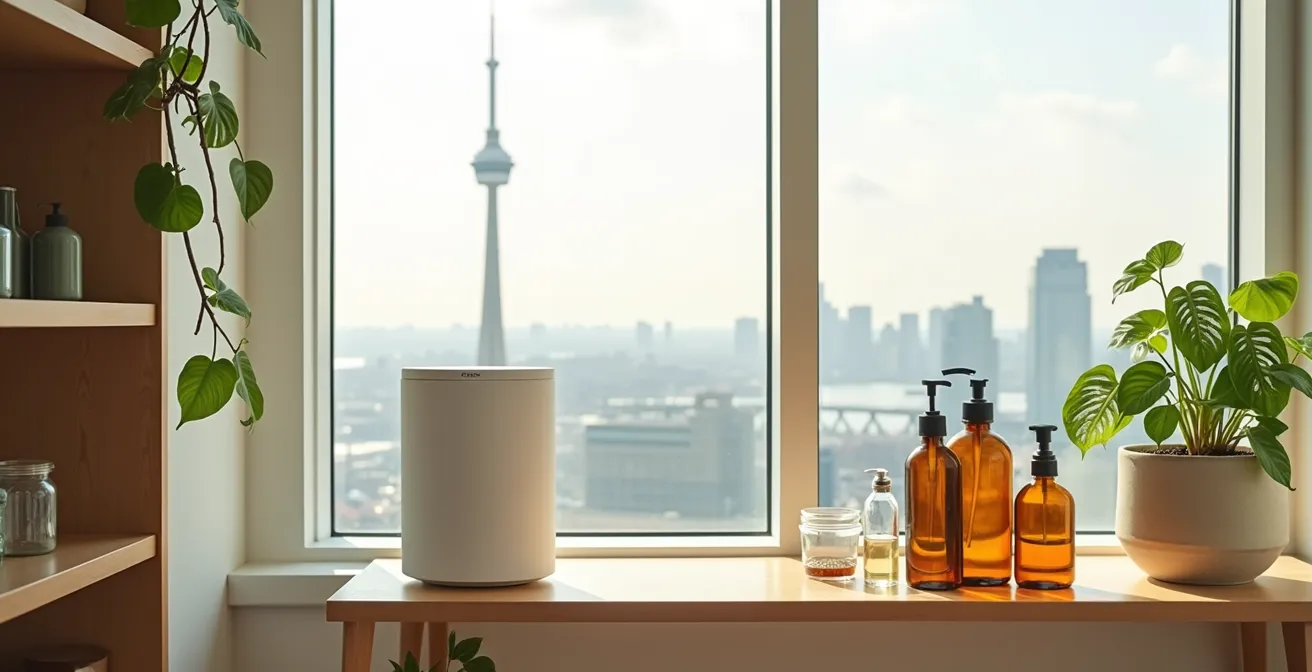
A truly non-toxic Toronto home requires moving beyond generic ‘green’ advice and addressing the city’s unique infrastructural hazards head-on.
- Older homes present risks from lead pipes and outdated wiring, while new condos can trap pollutants in their airtight structures.
- Proximity to Lake Ontario and major highways introduces specific challenges like moisture, salt, and heavy metal contamination.
Recommendation: Conduct a home audit focused on Toronto-specific risks—water source, ventilation systems, and building age—before investing in products.
For health-conscious Torontonians, the pursuit of a clean, holistic lifestyle often feels at odds with the realities of a dense urban environment. You meticulously choose organic produce and non-toxic personal care products, yet questions linger about the very air you breathe and the water you drink within your own home. The constant hum of traffic, the endless cycle of downtown construction, and the age of the city’s housing stock create a unique cocktail of environmental stressors that generic wellness advice fails to address.
Many guides will suggest common-sense solutions: buy an air purifier, use ‘eco-friendly’ cleaners, and drink filtered water. While not incorrect, this advice barely scratches the surface of Toronto’s specific challenges. These platitudes overlook the foundational issues—the “infrastructural toxicity” built into the city itself. The key to a truly toxin-free home in Toronto lies not in surface-level solutions, but in understanding and systematically mitigating the risks posed by your specific dwelling, whether it’s a century-old Victorian or a brand-new glass tower.
This article moves beyond the greenwashing to provide a preventative, science-based framework. We will dissect the distinct environmental hazards tied to Toronto’s development, from the legacy of lead water pipes in older neighbourhoods to the ventilation paradox in modern condos. By understanding these specific risks, you can implement targeted, effective strategies to create a genuinely healthy sanctuary amidst the urban landscape.
This comprehensive guide is structured to help you identify and address the most critical environmental health factors in your Toronto home. The following sections will provide detailed analysis and actionable steps for creating a safer living space.
Summary: A Guide to Mitigating Urban Pollutants in Your Toronto Residence
- Why Do Older Toronto Homes Still Have Lead Water Pipes?
- How to Choose an Air Purifier That Filters Condo Dust and Traffic Fumes?
- Local Refillery vs. Big Brand Green: Which Cleaning Products Are Truly Non-Toxic?
- The Ventilation Mistake That Traps VOCs in New Condos
- How to Grow Edible Herbs on a Balcony Without Heavy Metal Contamination?
- The Knob-and-Tube Wiring Mistake That Can Void Your Fire Insurance
- Why Do Maintenance Fees Spike for Buildings Directly on Lake Ontario?
- Owning a Heritage Home in Toronto: The Renovation Rules That Shock Buyers
Why Do Older Toronto Homes Still Have Lead Water Pipes?
One of the most significant “heritage hazards” in Toronto’s older housing stock is the continued presence of lead water pipes. Homes built before the mid-1950s were commonly connected to the city’s water main using lead service lines. While the city has been actively replacing these pipes, the process is slow and complex. According to the City of Toronto’s official data, just under 16,000 City-owned lead water service pipes remain in the system, in addition to the privately owned portions that are the homeowner’s responsibility. Lead can leach from these pipes into drinking water, posing significant health risks, particularly for pregnant people and young children, with no safe level of exposure.
The city has implemented corrosion control measures, such as adding phosphate to the water supply, which forms a protective layer inside pipes. A 2024 analysis of water samples showed that this program has been effective, with mean lead concentration dropping to just 0.15 parts per billion (ppb). However, the only permanent solution is the complete removal of the lead service line. For health-conscious residents in neighbourhoods like The Annex, Riverdale, or High Park, assuming your water is safe simply because you use a standard filter pitcher is a critical oversight. Identifying and addressing the source is paramount.
Action Plan: How to Check for Lead Pipes in Your Toronto Home
- Contact 311 to pre-register for a free lead testing kit, especially if your home was built before the mid-1950s.
- Pick up the kit at a designated City of Toronto location during business hours.
- Follow the specific instructions provided to take a water sample from your tap.
- Drop the completed sample at any listed location for free testing at an accredited Toronto Water lab.
- You will receive your results by phone or email, typically within 30 days of submission.
Confirming the material of your water service line is the foundational step in creating a non-toxic home environment in an older Toronto property.
How to Choose an Air Purifier That Filters Condo Dust and Traffic Fumes?
For residents of Toronto’s high-rise condos, the primary environmental threat is a form of “vertical contamination.” Pollutants from traffic on arteries like the Gardiner Expressway or Lake Shore Boulevard, combined with pervasive construction dust, don’t just stay at ground level; they rise and infiltrate buildings, even at higher floors. A generic air purifier is often insufficient for this unique mix of pollutants, which includes fine particulate matter (PM2.5), nitrogen oxides (NOx), and Volatile Organic Compounds (VOCs). The key to effective filtration is selecting a unit designed for these specific urban challenges.
The most critical feature to look for is a True HEPA filter, which is certified to capture 99.97% of particles as small as 0.3 microns. This is essential for trapping fine dust, pollen, and vehicle soot. Equally important for a Toronto condo is an activated carbon filter. This component is specifically designed to adsorb gases and odours, including VOCs from traffic fumes and off-gassing from new building materials.

Beyond the filter type, the purifier’s size and power, measured by its Clean Air Delivery Rate (CADR), must be matched to your room’s square footage. An undersized unit will be ineffective, constantly struggling to clean the air. For a typical downtown condo, maintaining proper indoor humidity is also crucial for air quality. HVAC experts recommend maintaining humidity levels between 35% to 50% to inhibit mold growth and reduce airborne irritants.
The following table provides a guideline for selecting the right CADR based on common Toronto condo sizes, ensuring the unit can perform at least five air changes per hour.
| Condo Size | Square Footage | Minimum CADR Required | Ideal Features for Toronto |
|---|---|---|---|
| Studio | 400 sq ft | 267 CFM | HEPA + Activated Carbon for VOCs |
| 1 Bedroom | 500 sq ft | 333 CFM | HEPA + Dehumidifier function |
| 2 Bedroom | 800 sq ft | 533 CFM | True HEPA + High mold spore CADR |
Therefore, a strategic purchase based on filter type and CADR is a non-negotiable component of a holistic health strategy in a Toronto condo.
Local Refillery vs. Big Brand Green: Which Cleaning Products Are Truly Non-Toxic?
The ‘green’ cleaning aisle at major supermarkets is often a masterclass in greenwashing. Vague terms like ‘natural,’ ‘plant-based,’ and ‘eco-friendly’ are marketing buzzwords, not scientific certifications. Many of these products still contain synthetic fragrances (listed as ‘parfum’), dyes, and preservatives that can contribute to indoor air pollution and skin irritation. For Torontonians, a more effective and transparent approach to non-toxic cleaning is to embrace hyper-local sourcing through the city’s growing network of refillery stores. These shops prioritize product transparency and waste reduction over slick marketing.
A prime example is Unboxed Market, Toronto’s first zero-waste grocery store. By offering package-free, often locally-made cleaning liquids, they empower consumers to bypass misleading branding and packaging waste altogether. Customers bring their own containers to fill up on everything from biodegradable dish soap to all-purpose cleaners, with full ingredient lists readily available. This model not only reduces plastic waste but also fosters a direct connection to the products’ origins, a level of trust impossible to achieve with mass-market brands.
When evaluating any cleaning product, whether from a refillery like Saponetti or a big-box store, a critical mindset is essential. First, demand full ingredient transparency; if the label is vague, be skeptical. Second, look for credible third-party certifications like EcoLogo or Green Seal, which verify environmental and health claims. Finally, consider performance on Toronto-specific issues. For instance, a good cleaner for a Toronto home should be effective at tackling hard water stains caused by the mineral content in water from Lake Ontario, a practical concern often overlooked by generic ‘green’ formulations.
Ultimately, shifting from passively buying ‘green’ to actively sourcing transparent products from local refilleries represents a fundamental step toward a genuinely non-toxic home.
The Ventilation Mistake That Traps VOCs in New Condos
Newer Toronto condos, with their floor-to-ceiling glass and modern aesthetics, come with an invisible health risk: “The Sealant Trap.” To meet energy efficiency standards, these buildings are constructed to be virtually airtight. While this is great for thermal insulation, it severely restricts natural air exchange. As a result, Volatile Organic Compounds (VOCs) that off-gas from new carpets, paints, engineered wood floors, and furniture become trapped indoors. This can lead to indoor air pollutant concentrations that are significantly higher than outdoors. Indeed, EPA studies show indoor air pollutant concentrations are often 2 to 5 times higher than outdoor levels.
The common-sense reaction—opening a window—is a critical mistake in a downtown core. This not only invites in traffic fumes, construction dust, and allergens but is also an inefficient way to ventilate a modern unit. The proper solution is to understand and correctly use the building’s mechanical ventilation system, typically a Heat Recovery Ventilator (HRV) or Energy Recovery Ventilator (ERV). An HRV is designed to continuously exhaust stale, polluted indoor air and supply fresh, filtered outdoor air. In winter, it cleverly transfers heat from the outgoing stale air to the incoming fresh air, saving energy while ensuring a constant, healthy air exchange without needing to open a window.
Many residents are unaware of their HRV’s function, leaving it off or on a low, ineffective setting. Ensuring your HRV is running as intended, and that its filters are cleaned or replaced regularly (typically every 3-6 months), is the single most important action you can take to combat “The Sealant Trap” and reduce VOC levels. For tenants experiencing issues with ventilation or mould, it’s important to know your rights and available resources.
Toronto Public Health and Ontario’s Landlord and Tenant Board provide guidance on mould, ventilation, and repairs
– Care& Family Health, Care& Family Health Toronto IAQ Guide
By shifting from passive window-opening to active management of the HRV system, residents can take control of their indoor air quality and mitigate the risks inherent in modern construction.
How to Grow Edible Herbs on a Balcony Without Heavy Metal Contamination?
For Toronto condo dwellers, a balcony herb garden is a cherished connection to nature and a source of fresh ingredients. However, the same “vertical contamination” that affects indoor air quality also poses a risk to urban agriculture. Balconies adjacent to high-traffic corridors like the Gardiner Expressway and Don Valley Parkway are subject to deposits of heavy metals from tire wear, brake dust, and exhaust fumes. These contaminants can settle on soil and plant surfaces, raising concerns about the safety of consuming homegrown edibles. Fortunately, with strategic planning, it is possible to create a safe and productive balcony garden.
Research from Canadian environmental studies highlights that not all plants absorb contaminants equally. Herbs such as rosemary, thyme, and oregano have been shown to absorb significantly fewer soil-borne heavy metals compared to leafy greens like lettuce or spinach. This makes them a much safer choice for high-traffic urban environments. The primary goal is to create as much of a barrier as possible between your plants and urban fallout. The following steps can dramatically reduce the risk of contamination:
- Use raised container beds at least 12 inches (30 cm) high to distance plant roots from surface deposits on the balcony floor.
- Source certified organic soil and compost from a reputable local garden centre, such as Sheridan Nurseries or Evergreen Garden Market, to ensure a clean growing medium from the start.
- Position your containers away from the outermost edge of the balcony, where airborne particulates are most likely to accumulate.
- Cover the topsoil with a layer of mulch (like straw or wood chips) to create a physical barrier that minimizes the direct deposit of airborne contaminants onto the soil.
By choosing the right plants and creating a protected growing environment, you can enjoy the benefits of balcony gardening while minimizing exposure to urban pollutants.
The Knob-and-Tube Wiring Mistake That Can Void Your Fire Insurance
Another “heritage hazard” lurking within the walls of many pre-1950s Toronto homes is knob-and-tube wiring. This early form of electrical wiring uses ceramic knobs and tubes to run copper conductors through wall cavities. While functional in its time, it lacks a ground wire, a critical safety feature of all modern electrical systems. This absence not only increases the risk of electric shock but also presents a significant fire hazard, especially when it comes into contact with modern insulation. Most insurers in Ontario will refuse to cover a home with active knob-and-tube wiring, or they will charge exorbitant premiums until it is fully replaced. Covering it with insulation is a common DIY mistake that can trap heat, degrade the wire’s sheathing, and create a severe fire risk, potentially voiding your fire insurance policy in the event of a claim.
For the holistically-minded homeowner, the issues with knob-and-tube extend beyond fire safety. The ungrounded and unshielded nature of this wiring system is a significant source of electromagnetic fields (EMF), a growing concern for those seeking to create a low-EMF, healthy home environment. As experts in heritage preservation note, updating this wiring is not just about safety, but about creating a modern, healthy living space.
Ungrounded knob-and-tube wiring creates higher EMF levels, a key concern for the holistic wellness audience, and modern, grounded wiring is a core component of a low-EMF healthy home
– Toronto Heritage Preservation Services, Heritage Home Renovation Guidelines
Replacing knob-and-tube wiring is a significant but non-negotiable investment for anyone purchasing an older Toronto home. It rectifies a major safety deficit, ensures insurability, and aligns the home with modern wellness principles by dramatically reducing ambient EMF levels. It is a foundational step in detoxifying a heritage property.
Addressing this hidden hazard is essential for both the physical safety and the environmental health of the home’s occupants.
Why Do Maintenance Fees Spike for Buildings Directly on Lake Ontario?
The breathtaking, unobstructed views from a Harbourfront condo come with a hidden and often costly trade-off: accelerated building degradation due to the “lake effect.” Proximity to Lake Ontario exposes buildings to higher humidity, persistent winds, and airborne salt spray, creating a form of infrastructural toxicity that inland buildings are spared. This harsh microclimate relentlessly attacks a building’s envelope—its windows, sealants, and exterior panels—leading to a much faster rate of deterioration. Consequently, condo corporations for these buildings must budget for significantly more frequent and intensive preventative maintenance to stave off serious issues like water infiltration and mold growth.
This directly translates into higher monthly maintenance fees for residents. The additional costs are not for luxury amenities but for essential building health services. For example, a study of lakefront building health reveals that Harbourfront properties may spend 40% more on HVAC maintenance compared to inland counterparts just to manage humidity and prevent mold. Window washing is required more frequently to remove corrosive salt deposits, and sealant inspections become an annual necessity rather than a triennial one.
The cost difference is a direct reflection of the preventative measures needed to maintain a healthy indoor environment. The table below illustrates the stark contrast in maintenance demands and their corresponding health impacts between a lakeside and an inland condo.
| Cost Category | Harbourfront Condos | North York Condos | Health Impact |
|---|---|---|---|
| HVAC Maintenance | 40% of budget | 25% of budget | Prevents mold/mildew |
| Window Cleaning | Monthly | Quarterly | Removes salt deposits |
| Envelope Sealing | Annual inspection | Every 3 years | Blocks moisture infiltration |
| Dehumidification | Continuous operation | Seasonal use | Controls humidity at 35-50% |
For prospective buyers, understanding that higher fees in lakeside buildings are a crucial investment in preventing long-term toxic exposure from mold and material decay is essential for a true cost-benefit analysis.
Key Takeaways
- The most significant home toxins in Toronto are often built into the city’s infrastructure, varying by the age and location of the property.
- Effective detoxification requires targeted strategies for specific risks, such as lead pipes in old homes and trapped VOCs in new condos.
- Local resources, from city testing programs to refillery stores, offer more effective solutions than generic, mass-market ‘green’ products.
Owning a Heritage Home in Toronto: The Renovation Rules That Shock Buyers
For many, owning a designated heritage home in a neighbourhood like Cabbagetown or Rosedale is the ultimate Toronto dream. What often shocks new buyers, however, is that the stringent renovation rules enforced by Toronto Heritage Preservation Services can be a powerful, if unintentional, guide toward a non-toxic, low-VOC home. These regulations frequently mandate the use of traditional, natural building materials over modern, synthetic alternatives that are often laden with chemicals. This forced adherence to historical methods effectively steers homeowners toward a healthier living environment.
Instead of using modern drywall compound, for example, heritage rules may require lime-based plasters, which are naturally mold-resistant and “breathe,” helping to regulate indoor humidity. Where a conventional renovation might use polyurethane to finish floors, heritage guidelines often point toward natural beeswax or carnauba wax finishes. This regulatory framework pushes back against the chemical-heavy practices of modern construction.
Heritage regulations in areas like Cabbagetown or Rosedale often mandate the use of traditional, natural materials like wood, lime plaster, and slate over modern synthetics, effectively guiding owners toward a less toxic, low-VOC home
– Toronto Heritage Preservation Services, Heritage District Guidelines 2024
Rather than viewing these rules as a burden, a health-conscious owner can see them as a curated list of non-toxic materials. Embracing this framework means choosing solutions that are both historically appropriate and beneficial for indoor air quality. Common heritage-approved materials include:
- Lime-based plasters and mortars for superior breathability.
- Natural milk paint or linseed oil-based finishes instead of acrylics.
- Sheep’s wool or cellulose insulation as an alternative to chemical-based spray foam.
- Reclaimed wood from local architectural salvage yards, which has already fully off-gassed.
By working with, rather than against, Toronto’s heritage regulations, owners can create a home that is not only historically authentic but also a sanctuary from modern toxins.