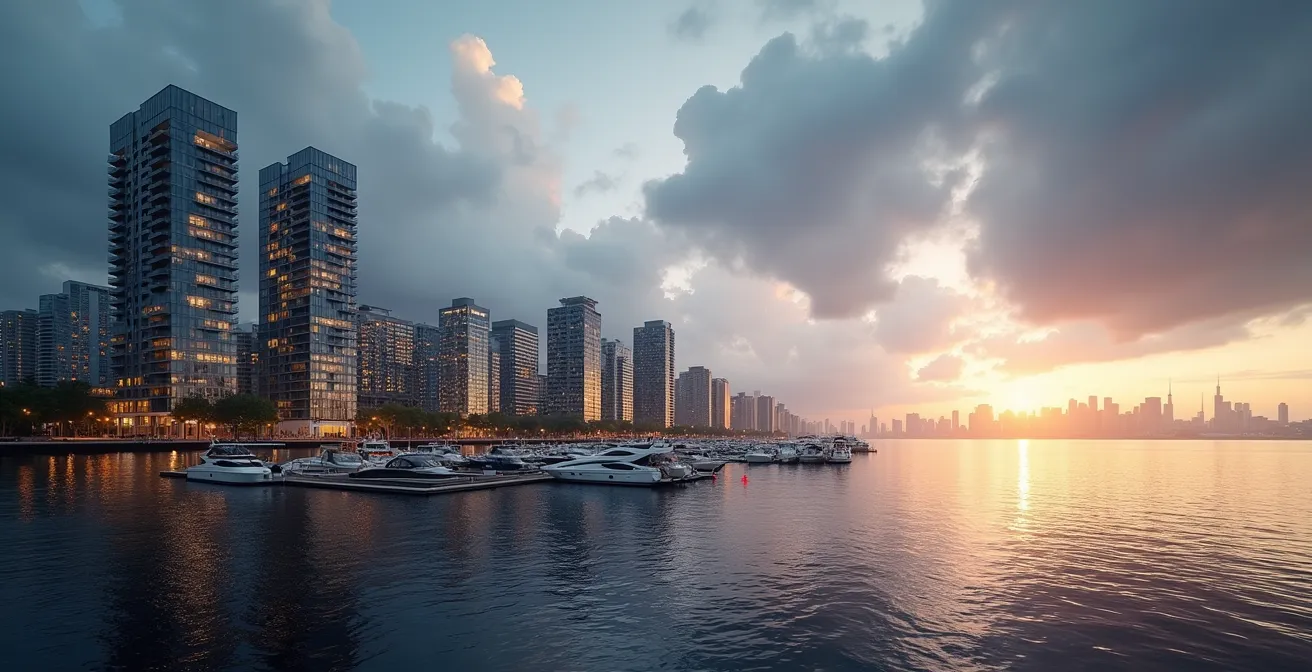
Contrary to popular belief, the biggest financial risks of a Toronto waterfront condo aren’t in the price tag, but in the invisible environmental and regulatory systems you can’t see.
- The constant environmental load from Lake Ontario directly inflates insurance premiums and accelerates building wear, driving up maintenance fees.
- Individual unit upgrades are often restricted by building-wide systems and strict condo bylaws, particularly for HVAC and heritage properties.
Recommendation: Before making an offer, look past the view. Prioritize investigating the building’s Reserve Fund Study and Building Condition Assessment to understand its true long-term health.
The allure of a Toronto waterfront condo is undeniable. Waking up to panoramic views of Lake Ontario, with the city’s pulse at your doorstep, seems like the ultimate urban dream. Potential buyers often fixate on the purchase price, the square footage, and the direction of the view, believing these are the primary factors in their investment. They compare maintenance fees, assuming a lower number is always better. This is a critical, and often costly, mistake.
What most buyers—and even many real estate agents—fail to appreciate is that a waterfront property is not just a home; it’s a complex ecosystem constantly interacting with its environment. The real story of your future costs and quality of life is not written in the sales brochure, but in the building’s technical specifications and its relationship with the unique environmental load of the lake. The wind, humidity, sun, and even the nearby airport flight paths create a web of systemic dependencies and regulatory traps that are invisible to the untrained eye.
But what if the key to a smart waterfront purchase wasn’t just finding the best view, but understanding the building’s hidden vulnerabilities? This guide moves beyond the surface-level discussion of condo fees. As a specialist in Toronto’s waterfront properties, I will walk you through the critical, often-overlooked factors that truly dictate the cost and experience of living on the lake. We will dissect the physical forces, the regulatory constraints, and the systemic quirks you must know before you sign on the dotted line.
text
This article provides a detailed roadmap for prospective buyers. It breaks down the specific challenges and hidden costs associated with waterfront living in Toronto, from the impact of the lake on building integrity to the fine print of condo bylaws and heritage rules.
Summary: Uncovering the True Cost of Living on Toronto’s Waterfront
- Why Do Maintenance Fees Spike for Buildings Directly on Lake Ontario?
- How to Inspect a Waterfront Condo for Water Damage and Insulation Issues?
- South View vs. North View: Which Is Better for Resale Value in Toronto?
- The Noise Mistake Buyers Make Near Billy Bishop Airport Flight Paths
- How to Upgrade Your Unit’s HVAC System Without Violating Condo Rules?
- Why Do You Need a Pleasure Craft Operator Card Even for a Seadoo?
- The Ventilation Mistake That Traps VOCs in New Condos
- Owning a Heritage Home in Toronto: The Renovation Rules That Shock Buyers
Why Do Maintenance Fees Spike for Buildings Directly on Lake Ontario?
The number one question buyers ask about waterfront properties is why the maintenance fees seem disproportionately high. The answer lies in the relentless environmental load imposed by Lake Ontario. Buildings on Queens Quay or Humber Bay Shores are not just near water; they are in a constant battle with wind, moisture, and fluctuating temperatures. This accelerates the wear and tear on the building’s exterior, or what engineers call the ‘building envelope’. Windows, sealants, concrete, and railings degrade faster than in a building just a few blocks inland.
This increased wear translates directly into higher operational costs for the condo corporation. More frequent repairs and a larger contribution to the reserve fund are necessary to keep the building safe and sound. But the most significant hidden driver of high fees is insurance. As an analysis of the M5J postal code shows, insurers see these properties as high-risk for wind-driven water damage and overland flood risk. These elevated insurance premiums are passed directly to owners through the maintenance fees.
Case Study: The Real Cost of a Lake View – Insurance Premium Loading
Buildings located directly on the Lake Ontario shoreline face significantly increased insurance premiums due to perceived flood risk. Insurers specifically evaluate properties in the M5J postal code for both wind-driven water damage and overland flood risk originating from the lake. These higher insurance costs are not an optional expense; they are factored directly into the condo corporation’s operational budget, becoming a primary driver that inflates the maintenance fees for every single unit owner.
For example, Wahi’s 2024 analysis reveals that fees can be staggering, with some one-bedroom units at 33 Harbour Square costing over $1,039 monthly. This figure isn’t just for amenities; it’s the price of fighting a constant war with mother nature.
How to Inspect a Waterfront Condo for Water Damage and Insulation Issues?
Since water and moisture are the primary enemies of a waterfront building, a standard visual inspection is not enough. You must become a detective, looking for subtle clues of past or potential future problems. Your goal is to assess the building envelope integrity before you buy. Water infiltration not only causes cosmetic damage but can lead to structural issues and mold, which are incredibly expensive to remediate. A history of such problems will be reflected in the building’s financial health and could signal upcoming special assessments.
Start by requesting the building’s key documents: the most recent Reserve Fund Study and the Building Condition Assessment (BCA). Look for terms like “spalling” (flaking concrete), “efflorescence” (white, salty deposits on concrete), or notes on the “building envelope”. These are red flags. When viewing the unit, pay close attention to window seals and the balcony. Check the underside of the balcony slab above you for cracks or rust-colored stains, which indicate water is getting into the rebar. The image below shows the kind of subtle textural damage you should be looking for.

As you can see, efflorescence and micro-cracks are early warning signs of water infiltration that can lead to major structural repairs down the line. To take your inspection to the next level, it’s wise to hire a professional with the right tools. An inspector with thermography certification can use an infrared camera to detect hidden moisture and insulation gaps that are invisible to the naked eye. This is not a corner to cut when considering a multi-million dollar investment.
Your Waterfront Condo Inspection Checklist
- Request Documents: Obtain the latest Building Condition Assessment (BCA) and Reserve Fund Study from the condo corporation to review its financial and physical health.
- Analyze the Report: Scour the documents for sections on ‘building envelope integrity’ and identify red-flag terms like ‘spalling’ or ‘efflorescence’ that signal concrete degradation.
- Hire a Specialist: Engage a home inspector with Thermography Level I or II certification to perform an infrared camera inspection for hidden moisture.
- Physical Balcony Check: Inspect the balcony slab from below, looking for any cracks or rust-colored stains that indicate water has penetrated the concrete.
- Evaluate Window Systems: Check the condition of the window systems and identify whether the building uses a less robust window wall system versus a more durable curtain wall system.
South View vs. North View: Which Is Better for Resale Value in Toronto?
The debate between a south-facing lake view and a north-facing city skyline view is a classic dilemma for Toronto waterfront buyers. The common wisdom is that the unobstructed south view commands a higher price and is therefore a better investment. While it’s true that south-facing units carry a significant price premium, the “better for resale” argument is not so simple. The decision involves a trade-off between upfront cost, ongoing expenses, and long-term appeal.
A south-facing unit offers a spectacular, serene view of Lake Ontario, which often translates to a 10-15% price premium per square foot compared to its north-facing counterparts. However, this premium view comes with hidden operational costs. The intense, direct sunlight leads to significantly higher summer cooling costs and causes accelerated UV damage, fading floors, furniture, and artwork. In the winter, the vast, grey expanse of the lake can feel bleak to some residents, whereas a north view offers the vibrant, twinkling city lights year-round.
A north-facing unit, while typically less expensive upfront, often provides a more dynamic and protected view. The risk of a new development obstructing a city view is often lower than the risk of a new tower popping up between you and the lake. As a buyer, you must weigh the emotional pull of the water against the practical financial and lifestyle implications detailed in the comparison below.
| Aspect | South View (Lake Ontario) | North View (City Skyline) |
|---|---|---|
| Price Premium | 10-15% higher per sq ft | 5-7% higher per sq ft |
| Summer Cooling Costs | 20-30% higher due to solar gain | Standard cooling costs |
| UV Damage to Interiors | High – accelerated fading | Minimal UV exposure |
| Winter Appeal | Can appear bleak and grey | Vibrant city lights year-round |
| Future View Protection | Risk from new developments | More stable long-term |
Ultimately, the “better” view depends on your personal priorities. If maximizing sunlight and the emotional value of a water view are paramount, the south view may be worth the extra cost. If you prioritize lower running costs and a dynamic, year-round cityscape, the north view could be the smarter long-term investment.
The Noise Mistake Buyers Make Near Billy Bishop Airport Flight Paths
While traffic and city hum are expected parts of downtown living, many waterfront buyers underestimate the specific acoustic impact of being near the Billy Bishop Toronto City Airport. The mistake is assuming all waterfront condos are affected equally. The reality is that the airport’s flight paths create a distinct ‘noise cone’ that disproportionately affects certain areas. As one analysis highlights, the location relative to Yonge Street is a critical factor.
Buildings west of Yonge Street, including CityPlace and Fort York, are more affected by Billy Bishop Airport noise as flight paths primarily use the Western Gap.
– Toronto Real Estate Analysis, GTA Homes Waterfront Guide 2024
This means a building on the east side of Harbourfront may experience significantly less aircraft noise than one just a few hundred metres to the west. Buyers who only visit a unit on a weekend or during off-peak hours can be shocked by the noise levels during peak weekday commuter times. Furthermore, the ongoing debate about potentially allowing jets at the airport and the planned removal of the 2033 slot cap could drastically change the noise landscape in the future, impacting quality of life and potentially property values.
To avoid this common mistake, you must conduct your own acoustic due diligence. Don’t rely on the seller’s disclosure. Proactive investigation is key. Here are the steps you should take:
- Check official flight path maps from the PortsToronto website before viewing any properties.
- Schedule visits to potential units during peak airport hours (typically 8-9 AM and 5-6 PM on weekdays) to experience the noise firsthand.
- Use a smartphone decibel meter app to take objective measurements of the ambient noise versus the noise during a takeoff or landing.
- If possible, compare readings between units facing west (towards the airport) and those facing east to understand the difference.
- Research the current status of the debate about expanding airport operations to assess future risk.
How to Upgrade Your Unit’s HVAC System Without Violating Condo Rules?
In a house, upgrading your heating, ventilation, and air conditioning (HVAC) system is straightforward. In a condo, it’s a minefield of restrictions. This is a perfect example of systemic dependencies, where your unit is tied to the building’s core infrastructure. Many Toronto waterfront condos, especially older ones, use two-pipe fan coil systems. This means the building collectively switches between heating and cooling, leaving residents with no control during unpredictable spring and fall weather.
Many new owners dream of installing a modern four-pipe system or a smart thermostat like a Nest, only to discover it’s impossible. You cannot unilaterally change the building’s plumbing from a two-pipe to a four-pipe system. Furthermore, many standard smart thermostats are incompatible with the high-voltage, multi-speed fan coil units common in Toronto condos. Upgrading often requires specialized, and expensive, adapters.

Any modification to the in-suite components, such as replacing the fan coil unit itself, is considered an alteration. This requires submitting a detailed plan to the condo board and hiring a board-approved, licensed contractor. Attempting an unauthorized upgrade can result in a hefty fine and an order to undo the work at your own expense. Before planning any HVAC improvements, you must first consult the condo corporation’s bylaws and the rules governing alterations to understand what is permissible. This isn’t a “forgiveness is easier than permission” situation.
Why Do You Need a Pleasure Craft Operator Card Even for a Seadoo?
The waterfront lifestyle often includes the dream of having a boat or personal watercraft (PWC) like a Seadoo docked just steps from your condo. However, this idyllic picture comes with its own set of regulatory and financial hurdles that can surprise new owners. The first is a legal requirement: in Canada, anyone operating a powered watercraft of any size needs a Pleasure Craft Operator Card (PCOC). It’s the equivalent of a driver’s license for the water, and the Toronto Police Marine Unit actively patrols the harbour to enforce this.
Case Study: Toronto Marine Unit Enforcement Activity
The Toronto Police Marine Unit maintains a strong presence around the Harbourfront and Toronto Islands, especially during summer long weekends. They regularly issue fines for non-compliance with the PCOC requirement. They also enforce a host of local bylaws that new boaters may not be aware of, including strict speed limits within the harbour, designated ‘no wake’ zones near rowing clubs and marinas, and prohibitions on operating powered watercraft near public beaches like Sugar Beach and HTO Park.
Beyond the legal requirements, there are significant practical and financial considerations. The cost and availability of a place to dock your vessel is a major factor. You can’t just park a boat anywhere. Marina slips in the desirable downtown area are scarce and expensive. You can expect to pay $3,000 to $5,000 per season for a spot at the Harbourfront or Outer Harbour Marina, and even then, you may face multi-year waitlists. These costs, along with insurance, fuel, and maintenance, can add a significant “second mortgage” to your waterfront lifestyle, turning the dream into a financial burden if not planned for properly.
The Ventilation Mistake That Traps VOCs in New Condos
When purchasing a brand-new or recently renovated condo, buyers are often captivated by the smell of fresh paint and new flooring. However, this “new condo smell” is actually a cocktail of Volatile Organic Compounds (VOCs) off-gassing from building materials, furniture, and finishes. While this happens in any new home, the problem is amplified in modern Toronto condos for a specific reason.
Modern Toronto condos are sealed for energy efficiency per Ontario Building Code, but this traps Volatile Organic Compounds from new flooring, paint, and furniture, with effects amplified in south-facing units where sun exposure increases off-gassing.
– Building Science Expert, Toronto Condo Ventilation Study
The airtight construction, designed to meet energy efficiency standards, means there is very little natural air exchange. This efficiency traps VOCs inside, potentially impacting indoor air quality. The common mistake buyers make is assuming the building’s Heat or Energy Recovery Ventilator (HRV/ERV) system will automatically handle it. Often, these systems are set to run on a timer (e.g., 20 minutes every hour) to save energy, which is insufficient to clear the high concentration of VOCs in a new unit. You must take proactive steps to improve your air quality.
Here is a protocol to follow when taking possession of a new condo:
- Before moving in, ask the developer if they can perform a ‘building flush-out’ by running the ventilation systems at maximum for 48-72 hours.
- If possible, “bake” the unit by raising the heat to 28-30°C for 48 hours with the windows slightly ajar to accelerate the off-gassing of VOCs before you occupy the space.
- Immediately purchase high-MERV rated replacement filters for your HRV/ERV, as the standard ones are often low quality.
- Ensure your HRV/ERV is set to run continuously for the first few months, not just on a timer cycle.
- Commit to cleaning or replacing the HRV/ERV filters quarterly to maintain proper airflow and filtration.
By actively managing your ventilation, you can mitigate the air quality issues inherent in a new, tightly sealed building and ensure your waterfront home is as healthy as it is beautiful.
Key Takeaways
- The true cost of a waterfront condo is dictated by its interaction with the environment (wind, water, sun), not just its purchase price.
- Your ability to renovate or upgrade is severely limited by building-wide systems and condo corporation bylaws, especially for HVAC and heritage properties.
- Thorough due diligence means investigating the building’s documents (BCA, Reserve Fund Study) and physical condition, not just the unit itself.
Owning a Heritage Home in Toronto: The Renovation Rules That Shock Buyers
Some of Toronto’s most iconic waterfront buildings, like the Tip Top Tailors or Queen’s Quay Terminal, are designated heritage properties. Owning a piece of history is incredibly appealing, but it comes with a complex and costly set of regulatory traps. When a building has a heritage designation, owners cannot simply perform standard renovations. All exterior-facing modifications, and sometimes even interior ones, are subject to strict rules enforced by a heritage board.
These rules are designed to preserve the historical character of the building, but they can be a financial shock to unsuspecting buyers. Something as simple as replacing a window becomes a major project. You can’t just go to a standard supplier; you must use specific, historically accurate materials and designs from approved vendors. This can be extraordinarily expensive and is a perfect example of a hidden liability.
Case Study: The Tip Top Tailors Window Replacement Rules
Owners in the designated Tip Top Tailors building on Lake Shore Boulevard West face a prime example of heritage restrictions. When windows need replacing, they cannot use standard, modern units. They are required to use specific, historically accurate suppliers approved by Toronto’s heritage board. These specialized windows can cost three to four times more than standard replacements. This significant expense directly impacts the condo corporation’s reserve fund and can often trigger large special assessments that all owners must pay.
This financial burden extends to insurance as well. Insurers know that the cost to repair or replace elements of a heritage building is much higher than for a standard one. Consequently, you can expect to pay 30-50% higher insurance premiums for a unit in a designated heritage building. Before falling in love with the character and charm, you must investigate the specific heritage designation and review the condo corporation’s minutes for any past or planned projects related to it. This “character” has a very real price tag.
Frequently Asked Questions about Toronto Waterfront Condos
Can I upgrade from a two-pipe to a four-pipe fan coil system?
No, individual unit owners cannot change the building’s core HVAC infrastructure. The two-pipe or four-pipe system is a building-wide feature. You can only upgrade the in-suite components, such as the fan coil unit itself, and this is still subject to board approval and the building’s specific rules.
Why won’t my Nest thermostat work in my Toronto condo?
Many Toronto condos, particularly older ones, use high-voltage, multi-speed fan coil systems that are incompatible with standard low-voltage smart thermostats like Nest or Ecobee. To make it work, you will likely need a specialized adapter or a thermostat specifically designed for fan coil units, which can cost between $200 and $400 plus installation.
Do I need special permission to add a dehumidifier?
It depends on the type. A standalone, portable dehumidifier that you plug into a wall outlet typically does not require board approval. However, if you plan to install an integrated, whole-home dehumidifier that connects directly to your HVAC system and drainage, this is considered a major alteration. You will absolutely need to submit an Alteration Agreement and use a board-approved contractor for the installation.