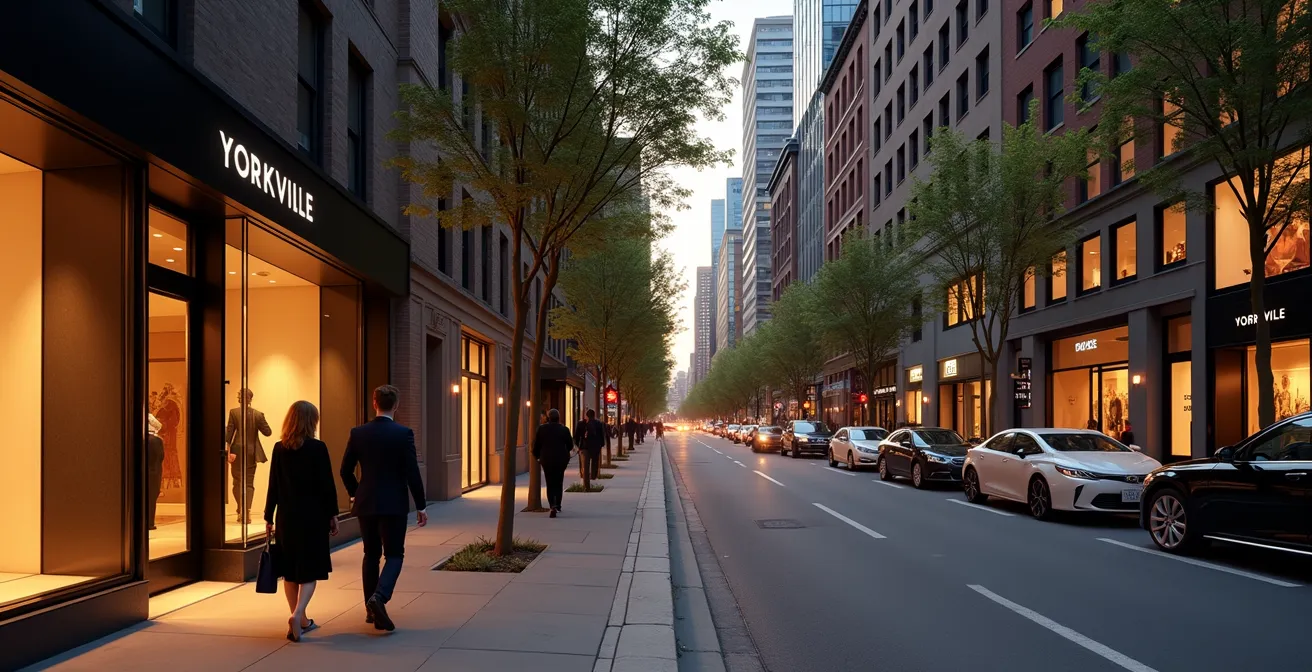
Affording Yorkville isn’t about salary; it’s about underwriting the significant cost of social integration.
- Real estate carries a non-negotiable brand premium, driven by its international reputation and “Starchitect” developments.
- Daily life has a built-in “lifestyle inflation” tax, where routine expenses also function as social signals.
- Access to the neighbourhood’s influential social circles is a pay-to-play system requiring strategic financial investment.
Recommendation: Your financial plan must include a dedicated “Social Capital Investment” fund that exists entirely outside of your standard living expenses.
The question of what salary is needed to live in Yorkville is one that many high-income earners in Toronto ask. On the surface, the answer seems tied to soaring real estate prices and the allure of high-end boutiques lining the Mink Mile. Many analyses stop there, focusing on mortgage calculations and property taxes. They suggest that if you can afford the home, you can afford the lifestyle. This is a fundamental, and potentially costly, misunderstanding.
The true financial threshold for Yorkville is not just the cost of entry, but the ongoing cost of belonging. This figure extends far beyond housing. It encompasses a complex ecosystem of social, cultural, and lifestyle expenditures that are essential for genuine integration. The real question isn’t just “Can I afford to live here?” but “Can my cash flow sustain the investment required to build social capital in this environment?”
This financial deep dive moves beyond generic advice. We will deconstruct the Yorkville lifestyle into its core financial components, analyzing it as a wealth manager would: a series of strategic investments. We will quantify the premium on real estate, map out the costs of accessing exclusive social networks, and break down the subtle but significant expenses of daily life that define one’s status within Canada’s most aspirational neighbourhood. The goal is to provide a clear-eyed financial framework for determining if you are truly positioned to thrive, not just reside, in Yorkville.
This article provides a detailed financial breakdown of the Yorkville lifestyle. The following sections will guide you through the key investment areas you must consider, from the real estate premium to the unwritten rules of social engagement.
Table of Contents: A Financial Breakdown of the Yorkville Lifestyle
- Why is Yorkville Real Estate 30% Higher Than the Toronto Average?
- How to Get Invited to Exclusive Yorkville Galas and Events?
- Whole Foods vs. Pusateri’s: Which High-End Grocer Drains Your Wallet Faster?
- The Fashion Mistake That Screams “Tourist” in Yorkville Cafes
- How to Find a Rental in a Boutique Building Before It Hits MLS?
- Why Do Downtown Toronto Rents Fluctuate So Drastically in the Fall?
- The Walrus vs. Cactus Club: Which Happy Hour Yields Better Connections?
- Shopping on the Mink Mile: How to Get VIP Service Without Spending Millions?
Why is Yorkville Real Estate 30% Higher Than the Toronto Average?
The 30% premium on Yorkville real estate isn’t just about location; it’s a calculated fee for purchasing a global brand. You are not simply buying square footage; you are acquiring an asset with a built-in “brand premium.” This is driven by the area’s international reputation as a luxury hub, cemented by having the third most expensive retail space in North America. This commercial value creates a powerful halo effect, directly inflating the worth of adjacent residential properties. Every flagship store and five-star hotel acts as a market validator, justifying the higher cost per square foot as an investment in a stable, high-demand asset class.
Furthermore, this premium is actively manufactured by what is known as the “Starchitect effect”—the impact of world-renowned architects and premier brands on property values. These developments set new financial benchmarks for the entire neighbourhood, ensuring the baseline cost of entry remains exceptionally high.
Case Study: The Four Seasons Private Residences Premium Effect
The Four Seasons Residences demonstrates the ‘Starchitect effect’ in Yorkville’s market, offering premier condominium experiences with world-class amenities. These luxury developments feature high-end finishes including hardwood flooring, marble countertops, and floor-to-ceiling windows, with amenities like fitness centers, spas, and rooftop pools. By associating a property with a globally recognized luxury service brand, developments like this don’t just sell condos; they sell a pre-packaged, high-status lifestyle. This strategy has proven to consistently set new price benchmarks for the entire neighborhood, pulling the value of all surrounding properties upward.
Therefore, budgeting for Yorkville real estate requires a mindset shift. You must factor in this intangible brand value as a real, non-negotiable line item. It’s the price of admission to a neighbourhood that functions less like a residential area and more like a blue-chip stock portfolio: expensive to acquire, but designed to hold its value against market fluctuations.
Your Financial Readiness Checklist for Yorkville
- Asset Allocation Review: Calculate if a Yorkville property would over-concentrate your net worth in a single, non-liquid real estate asset. Does it align with your overall risk tolerance?
- Cash Flow Stress Test: Model your monthly budget including not just the mortgage/rent but also inflated property taxes, high condo fees, and a 20-30% “lifestyle inflation” buffer for daily costs.
- Social Capital Budgeting: Define a separate, annual fund for social investments (charity galas, club memberships, networking events). Is this a sustainable line item in your financial plan?
- Liquidity Check: Assess your liquid assets. Do you have sufficient cash reserves to cover at least six months of the total, inflated Yorkville cost of living without selling other investments?
- Exit Strategy Analysis: Consider the conditions under which you would sell. Given the high entry cost, what is your target ROI and the minimum market condition for a profitable exit?
How to Get Invited to Exclusive Yorkville Galas and Events?
In Yorkville, your social calendar is a direct reflection of your financial investment in the community. Access to the most influential rooms is rarely accidental; it’s the result of a deliberate and well-funded strategy. Invitations to exclusive galas, private collection launches, and donor events are the dividends paid on your social capital. To accumulate this capital, you must treat your social life as a portfolio and allocate funds to specific, high-ROI activities. Merely living in the neighbourhood is not enough; you must actively “buy in” to its social infrastructure.
This means moving beyond passive participation and engaging in strategic spending. The most effective pathways to the inner circle involve demonstrating a significant and consistent commitment to the institutions and businesses that form the backbone of Yorkville’s elite social scene. Think of it as a tiered membership system where financial contribution unlocks progressively higher levels of access and influence.

The key is to identify the channels that offer the most direct route to the connections you seek. Each pathway requires a distinct financial and time commitment, but all are designed to signal your status as a serious community stakeholder, not a transient resident. The following are not just social tips; they are proven investment strategies for building a high-value social portfolio in Yorkville:
- Join the Charity Circuit: This is the most traditional and visible path. Purchase tickets or, more effectively, full tables at major fundraisers for Toronto’s cornerstone institutions like the SickKids Foundation or the Princess Margaret Cancer Foundation. This positions you as a philanthropist and provides structured networking opportunities with the city’s established elite.
- Become a Valued Luxury Retail Client: Transform from a shopper into a client. Establish a consistent relationship with a specific sales associate at a flagship store on Bloor Street (e.g., Holt Renfrew, Chanel, Hermès). This loyalty is rewarded with invitations to private collection previews and exclusive client events, offering access to a more fashion-forward and international crowd.
- Secure Strategic Memberships: The most direct path to cultural influencers is by joining the boards of key cultural institutions, many of which are in or around Yorkville. A seat on the board of the Gardiner Museum or the Canadian Opera Company requires a significant financial donation but yields unparalleled access to exclusive donor receptions and intimate gatherings with influential patrons of the arts.
Whole Foods vs. Pusateri’s: Which High-End Grocer Drains Your Wallet Faster?
In Yorkville, grocery shopping is less about sustenance and more about signaling. Your choice of grocer is a public declaration of your identity, priorities, and financial standing. The two dominant players, Pusateri’s Fine Foods and Whole Foods, cater to this reality, but they drain your wallet in fundamentally different ways. The question is not simply which is more expensive, but which form of “lifestyle inflation” aligns with your personal brand. One sells time-saving convenience and establishment status; the other sells a vision of health-as-wealth and modern wellness.
Pusateri’s, the long-standing institution, operates on a model of curated luxury. Its premium is tied to high-end prepared meals, rare imported goods, and an atmosphere that signals “old money.” You pay for the convenience of having a chef-quality meal ready to go and the social currency that comes from carrying their iconic bag. Whole Foods, by contrast, bases its premium on the promise of organic purity and wellness. You invest in the perceived long-term benefit of clean ingredients and align yourself with a health-conscious, “newer-money” identity. Both are expensive, but the expense serves a different narrative. The following analysis, based on data from Bloor-Yorkville BIA observations, breaks down the true cost profile.
| Aspect | Pusateri’s | Whole Foods |
|---|---|---|
| Primary Focus | High-end prepared meals, imported delicacies | Organic raw ingredients, wellness products |
| Cost Profile | Time-saving convenience premium | Health-investment premium |
| Social Currency | Old-money establishment signal | Health-conscious, newer-money identity |
| Impulse Buy Traps | Extensive cheese and pastry counters | Vast wellness and beauty aisles |
Ultimately, your choice becomes a strategic financial decision. Are you paying a premium for the time-saving luxury of expertly prepared foods (Pusateri’s), or are you investing in the raw materials of a wellness-focused lifestyle (Whole Foods)? Both will significantly inflate your grocery budget compared to a standard supermarket, but they offer a different return on your lifestyle investment. Your bank statement will reflect not just what you eat, but who you aspire to be.
The Fashion Mistake That Screams “Tourist” in Yorkville Cafes
The most common fashion mistake in Yorkville is not a matter of being underdressed, but of being overtly branded. In the cafes and on the streets of the neighbourhood, a culture of “quiet luxury” prevails. This is the critical distinction between a resident and a tourist: tourists display the brands they bought on Bloor Street, while residents wear the quality. Conspicuous logos and monogram-heavy patterns are viewed as a sign of someone trying to prove their wealth, which is the antithesis of the local ethos. True status is communicated through impeccable tailoring, superior fabrics, and the confident subtlety of an item whose value is clear only to those “in the know.”
This “Logo Paradox” is central to understanding the area’s social currency. While the neighbourhood is home to the world’s most recognizable luxury brands, the social code dictates a more discreet expression of affluence. The investment is in the craftsmanship, not the marketing.
Case Study: The Logo Paradox in Yorkville’s Fashion Culture
Yorkville’s established locals practice ‘quiet luxury.’ While luxury brands are ubiquitous with flagship stores like Chanel, Prada, and Hermès lining the streets, the truly sophisticated residents opt for understated quality from brands like Brunello Cucinelli or Loro Piana, where the value is in the fabric and cut rather than conspicuous logos. The neighborhood’s fashion culture values discretion over display. This creates a paradox where one is surrounded by logos but is socially rewarded for avoiding them in personal attire. The signal is not “I can afford this brand,” but rather “My understanding of quality transcends the need for a logo.”
To integrate seamlessly, one must master the unspoken language of Yorkville’s style. This involves a shift in purchasing strategy from buying labels to investing in pieces. It’s about building a wardrobe that communicates status through quality and fit rather than branding. Adopting this mindset is crucial for being perceived as a peer, not a visitor.
- Choose Understated Luxury: Prioritize quality materials (cashmere, silk, fine wool) and impeccable tailoring over any item with large or repeating brand logos. The fit of the garment should be the primary statement.
- Perfect Your Footwear: Shoes are a key signifier. Opt for fashion-forward but context-appropriate footwear. This means high-end designer sneakers, classic loafers, or elegant boots, not practical walking shoes or flashy, athletic-style trainers.
- Master the Unhurried Presence: Your demeanor is part of your look. Avoid behaviors that signal you are a visitor, such as rushing, taking numerous photos, or treating an upscale cafe like a fast-food chain. A calm, unhurried presence is the ultimate accessory.
How to Find a Rental in a Boutique Building Before It Hits MLS?
In Yorkville’s competitive rental market, the most desirable properties—particularly those in exclusive, low-rise boutique buildings—are often leased before they ever appear on public listings like MLS. This “shadow market” operates on relationships and insider knowledge, effectively gatekeeping the best units for a select few. To access these rentals, a standard approach of online searching is insufficient. You must adopt a proactive, network-based strategy, treating your apartment search as a financial and social campaign. The goal is to position yourself as a top-tier candidate who gains access to opportunities through private channels.
This market is particularly tight due to the local demographics. With 6,127 households averaging just 2 people each, there is high demand for well-appointed one- and two-bedroom units from affluent singles, couples, and downsizers who value privacy and exclusivity. These tenants are the target demographic for boutique buildings, and landlords prefer to rent to them through trusted networks to minimize risk and turnover.
Gaining entry requires bypassing the public funnel and connecting directly with the gatekeepers. This means investing time and resources in building the right relationships. The following strategies are not optional; they are the required methodology for securing a premium, off-market rental in Yorkville.
- Connect with Hyper-Local Specialists: Do not use a generalist realtor. Work exclusively with agents who specialize in Yorkville luxury rentals. These professionals maintain “pocket listings”—properties that are rented out through their private networks before ever being publicly advertised. They are your single most important asset.
- Build Concierge Relationships: The concierges in top-tier buildings are the ultimate insiders. They are aware of potential vacancies months in advance. By respectfully and professionally cultivating a rapport, you can be added to informal notification lists, giving you a critical head start.
- Apply Directly to Building Management: For highly sought-after boutique buildings, contact their property management offices directly. Inquire about joining a priority waitlist. This administrative approach can bypass both realtors and public listings, placing you in a direct queue for future openings.
Why Do Downtown Toronto Rents Fluctuate So Drastically in the Fall?
The dramatic spike in downtown Toronto rental prices every fall is not a random market quirk; it is a predictable convergence of three powerful economic forces. While the entire city feels this pressure, Yorkville and its adjacent neighbourhoods experience it most acutely due to their proximity to major employment and academic hubs. Landlords are fully aware of this seasonal surge and strategically position their lease renewals and pricing to maximize returns during this peak demand window. For prospective renters, understanding these drivers is critical for timing your search and negotiating effectively.
The primary driver is the academic cycle, but it’s a misconception that it’s only about undergraduate students. The most significant impact on the high-end rental market comes from a more affluent academic demographic, creating intense competition for premium properties.
Case Study: The University of Toronto Effect
The Annex neighbourhood, located on Yorkville’s western fringe, is home to the University of Toronto. Every August and September, this area experiences a massive influx not just of students, but of affluent international graduate students, medical residents, and newly hired faculty. This demographic seeks premium, well-located rentals and often has the financial backing (family wealth, stipends, or signing bonuses) to pay above asking price, creating a ripple effect that drives up competition and prices in the immediately adjacent and more luxurious Yorkville market.
This academic surge coincides perfectly with the corporate hiring calendar, creating a perfect storm of rental demand. To navigate this market, you must recognize that you are competing against a flood of well-funded renters on a tight deadline. The key factors creating this hyper-competitive fall market are clear and consistent:
- The University of Toronto Effect: A massive influx of international graduate students, medical school residents, and faculty arrives, all seeking premium rentals within a tight radius of the St. George campus.
- The Bay Street Signing Bonus Cycle: New associates at Toronto’s top law firms, banks, and consulting firms all start their careers in late summer. They enter the rental market simultaneously, armed with relocation budgets and signing bonuses, ready to secure high-end condos near the financial district.
- The Landlord’s Winter Hedge: Experienced landlords strategically increase rents in August and September to capitalize on peak demand. This allows them to secure a high-paying tenant for a one-year lease, effectively “hedging” against the risk of a vacancy during the slow winter months (December to February) when demand freezes.
The Walrus vs. Cactus Club: Which Happy Hour Yields Better Connections?
In Yorkville, a happy hour is rarely just about discounted drinks; it’s a strategic networking opportunity. Your choice of venue is a critical decision that determines the type of social capital you are likely to acquire. The environment dictates the crowd, the style of interaction, and ultimately, the return on your investment of time and money. The key is to distinguish between venues designed for slow rapport-building with the establishment and those built for high-impact networking with a more dynamic, modern crowd. Choosing the right one depends entirely on your networking objectives.
A traditional pub fosters a quieter, conversation-based setting ideal for building trust over repeated visits, while a trendy rooftop bar offers a high-energy, “see-and-be-seen” atmosphere for making a quick impression on a larger, more transient group. As an analysis of Yorkville’s social venues shows, each has a distinct cost profile and yields a different type of connection.
| Aspect | Traditional Pub (e.g., The Oxley) | Trendy Hotspot (e.g., Kasa Moto Rooftop) |
|---|---|---|
| Connection Type | Old Toronto (law, arts, established families) | New Toronto (tech, finance, influencers) |
| Networking Style | Slow rapport building through repeat visits | Quick impact networking in dynamic crowds |
| Environment | Quieter, conversation-based setting | High-energy, see-and-be-seen atmosphere |
| Cost Profile | Beer-friendly, lower social buy-in | Premium cocktails, higher dress code investment |
The choice is a strategic one. If your goal is to integrate with Toronto’s established families and legal or arts communities, a traditional pub is the superior investment. If you are looking to connect with entrepreneurs in tech and finance, a trendy hotspot will provide a higher ROI. As the experts at Toronto Realty Boutique note, the right venue can become a valuable tool in your social arsenal.
One of our favourite spots is the rooftop of Kasa Moto – delicious sushi among the treelined rooftop is the perfect spot for a mid-afternoon break from shopping
– Toronto Realty Boutique, Living in Yorkville Guide
Key Takeaways
- The Yorkville “brand premium” is a real, quantifiable cost applied to all assets, from real estate to groceries.
- Social access is not a byproduct of residency; it is a direct result of strategic financial investment in charities, clubs, and culture.
- Understated quality (“quiet luxury”) is the dominant social currency, valuing craftsmanship over conspicuous branding.
Shopping on the Mink Mile: How to Get VIP Service Without Spending Millions?
Securing VIP treatment in Yorkville’s luxury boutiques is not about the size of your first purchase, but the strategy behind it. The most sophisticated clients understand that the goal is not to be a one-time big spender, but to become a recognized and valued member of the store’s client book. This status unlocks a host of benefits, including access to private sales, invitations to exclusive events, and the undivided attention of senior sales associates. Achieving this doesn’t require a millionaire’s budget; it requires a connoisseur’s approach.
The key is to transform your relationship with the store from transactional to relational. This is achieved through a series of deliberate actions designed to signal that you are a serious, long-term client with a genuine appreciation for the brand, not just a tourist looking for a souvenir. This approach builds a different kind of equity with the staff, one based on respect and shared interest rather than raw purchasing power.

By focusing on building a relationship, you change the dynamic. You are no longer just another customer; you become a client whose loyalty and taste are assets to the sales associate. This investment in relationship-building yields a far greater return than a single extravagant purchase ever could, providing sustained VIP service over the long term.
- Make a Strategic First Purchase: The entry point to the client book is often a small, considered item. Buying a fragrance, a silk scarf, or a small leather good flags you as a new client without a massive initial outlay. This first purchase is the key that unlocks future communication.
- Build a Sales Associate Relationship: On each visit, request the same knowledgeable sales associate. This consistency transforms you from an anonymous shopper into “their” client. They will become your personal conduit for information on new arrivals, pre-orders, and private sales.
- Leverage Off-Peak Hours: Visit boutiques on a Tuesday or Wednesday morning. The store will be quiet, allowing for uninterrupted conversation with staff. Use this time to ask questions and demonstrate a genuine interest in the brand’s heritage and craftsmanship. This earns you a higher level of respect as a connoisseur, not just a consumer.
To determine if your portfolio and cash flow can support this level of sustained financial and social investment, the next logical step is a detailed analysis tailored to these unique neighbourhood pressures. Evaluate your financial position against these benchmarks to make an informed decision.