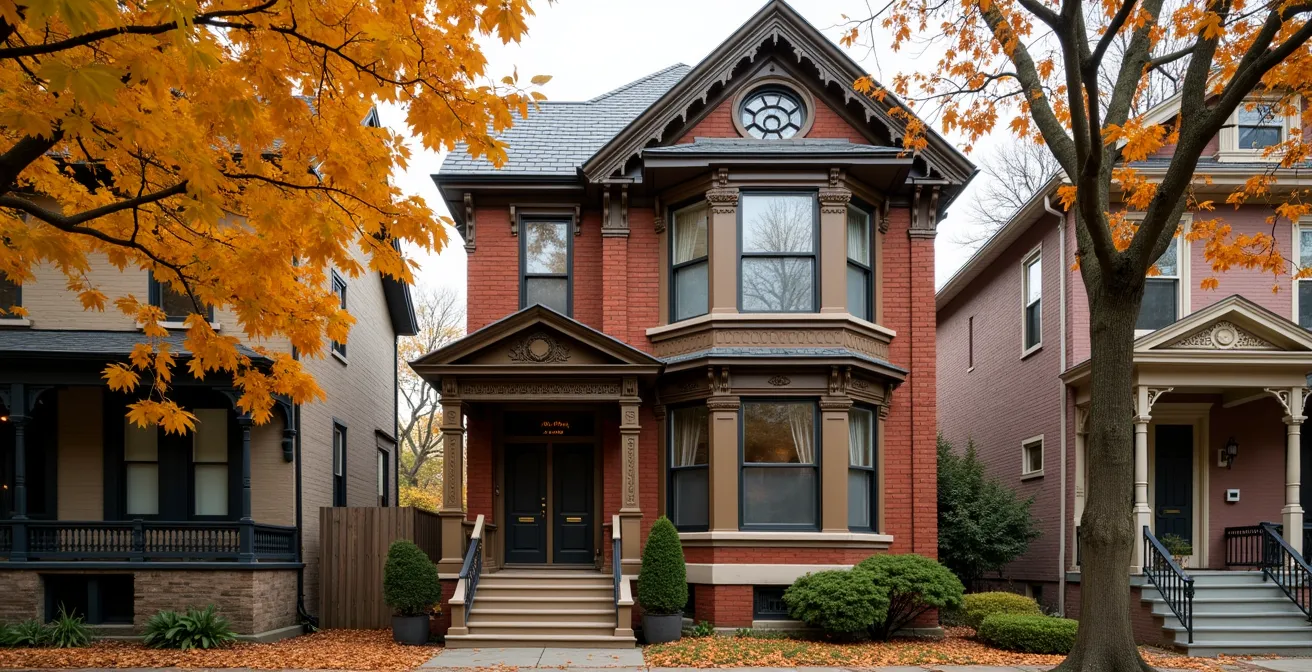
The romantic dream of owning a Toronto heritage home often hides a reality of costly, invisible bureaucratic traps that go far beyond a simple building permit.
- Non-compliant renovations, even from previous owners, create a “heritage compliance debt” that new buyers inherit, with repair costs that can be staggering.
- Standard insurance policies are often voided by heritage-specific risks like knob-and-tube wiring or improper insulation, requiring expensive, specialized coverage.
Recommendation: Success lies not in finding a good contractor, but in mastering the city’s heritage permit process and conducting a specialized pre-purchase audit to uncover these hidden financial liabilities.
The dream of owning a heritage home in Toronto is a potent one. You picture a Victorian bay-and-gable in Cabbagetown or a stately Edwardian in The Annex, imagining yourself as the custodian of a piece of the city’s soul. Most prospective buyers anticipate some challenges; they know renovations will be more complex and that costs for specialized labour are higher. The common advice is to “budget more” and “check with the city.” But this barely scratches the surface of the problem.
As a heritage architect practicing in Toronto, I’ve seen this dream curdle into a nightmare of unforeseen costs and bureaucratic dead ends. The real challenge isn’t the difficulty you can see; it’s the web of hyper-specific rules, insurance clauses, and material requirements that are invisible to the uninitiated. These aren’t suggestions; they are rigid regulations that can dictate everything from your exterior paint choices to the type of mortar you use. Ignoring them doesn’t just lead to fines—it can void your fire insurance and trap you in a “permit rejection loop” that drains your finances and your will.
The key to success is shifting your perspective. You are not just renovating a house; you are entering into a legal agreement to preserve a designated cultural asset. This guide is designed to give you an insider’s view of the most common and shocking rules that trip up new owners. We will move beyond the generic warnings and expose the specific financial and legal traps you need to anticipate, from navigating permit applications to understanding the costly mistakes that can turn your historic property into a modern-day money pit.
This article will walk you through the critical regulations and hidden costs every prospective heritage homeowner in Toronto must understand. From permits and insurance to wiring and insulation, we will detail the specific challenges and provide a clear roadmap for navigating them successfully.
Summary: An Insider’s Guide to Toronto’s Heritage Home Regulations
- Why Does a “Part IV” Designation Restrict Your Exterior Paint Choices?
- How to Apply for a Heritage Permit in Toronto Without Getting Rejected?
- Heritage Home Insurance vs. Standard Policy: What is the Premium Difference?
- The Knob-and-Tube Wiring Mistake That Can Void Your Fire Insurance
- How to Insulate a Brick Victorian Home Without Damaging the Facade?
- How to Access the Original Blueprints of Toronto’s Historic Estates?
- Why Do Downtown Toronto Rents Fluctuate So Drastically in the Fall?
- Buying Local Art in Toronto: How to Start a Collection on a $500 Budget?
Why Does a “Part IV” Designation Restrict Your Exterior Paint Choices?
One of the first shocks for new heritage homeowners is the loss of aesthetic freedom, especially with something as seemingly simple as paint. If your property is designated under Part IV of the Ontario Heritage Act, you don’t have carte blanche. This designation is applied to individual properties of significant cultural heritage value, and its goal is to conserve the very features that make the building special. In Toronto, these heritage attributes are meticulously documented, and any alteration, including painting, requires a formal Heritage Permit.
The city’s Heritage Preservation Services isn’t trying to be difficult; they are enforcing a mandate to maintain the historical integrity of a building and its streetscape. A historically inappropriate color can diminish the architectural character as much as removing an original porch. This became clear in a well-known situation in Cabbagetown, where a homeowner’s plan to use bold, authentic Victorian colours was initially met with resistance. Only after presenting detailed research and working with a consultant did they gain approval, proving that the process requires justification, not just personal taste. The entire system is rooted in provincial law, as heritage homes are designated under legislation from the Ontario Heritage Act, enacted in 1975 to protect these significant buildings.
This process is not about opinion; it’s about evidence. You must demonstrate that your chosen palette is appropriate for the period and style of your home. Using pre-approved historical color collections from paint manufacturers is a good starting point, but success depends on a well-researched application that respects the property’s unique “Statement of Significance.”
Your Action Plan: Navigating Heritage Paint Colour Approval in Toronto
- Obtain your property’s “Statement of Significance” from Toronto Heritage Preservation Services to understand which architectural elements and colour schemes are protected.
- Research period-appropriate shades from lines like Benjamin Moore’s Historical Collection or by consulting Toronto Heritage Colours guides to match your home’s style.
- Schedule a pre-application consultation with Heritage Preservation Services to informally discuss your choices and get feedback before formal submission.
- Prepare colour samples and supporting documents, including photographs, showing how your choices align with the home’s history and the neighbourhood’s character.
- Submit your Heritage Permit application with all documentation, including a detailed rationale explaining why your selection is historically appropriate.
How to Apply for a Heritage Permit in Toronto Without Getting Rejected?
The Heritage Permit application is where most dream renovations stall, often trapping owners in what I call the “Permit Rejection Loop.” It’s a costly cycle of submission, rejection, revision, and resubmission. Unlike a standard building permit, a heritage permit is not a checklist to be completed; it is a formal proposal that must be persuasively argued. The primary reason for rejection is almost always insufficient or inaccurate documentation. City staff and review committees need to see exactly what you’re proposing and how it respects the building’s heritage attributes.
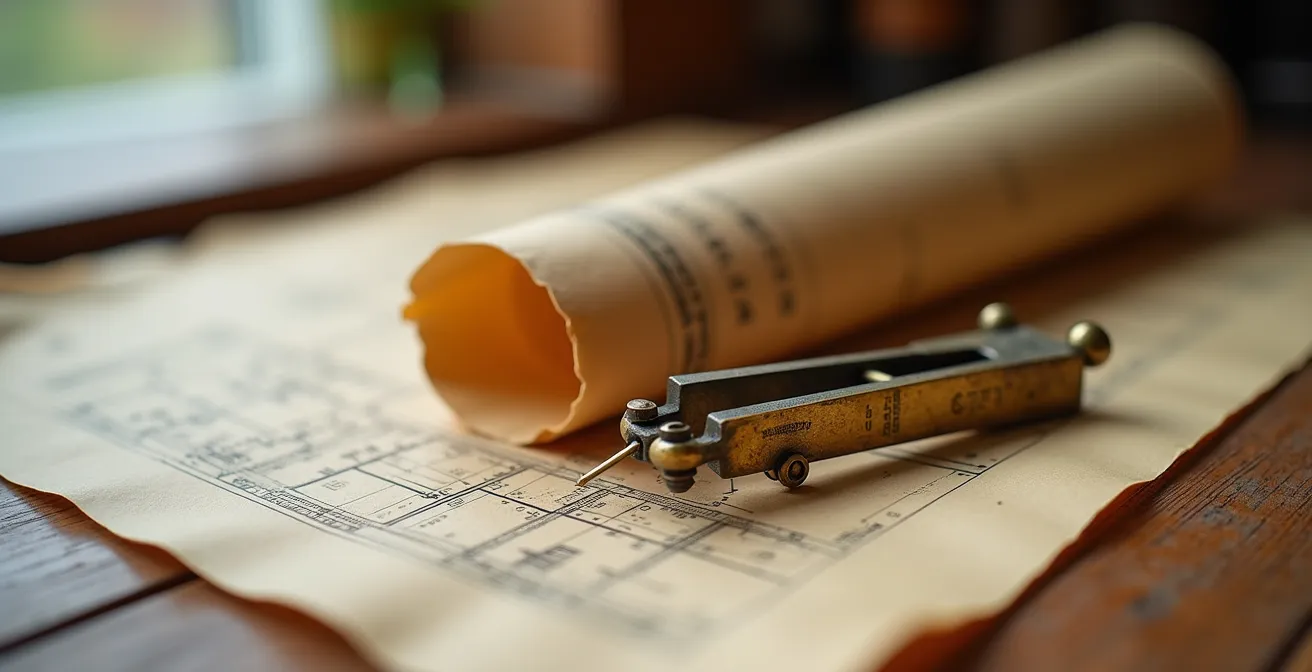
A successful application is built on a foundation of professional, detailed drawings. Vague sketches or contractor markups are an immediate red flag. You need “as-built” surveys showing the current state and detailed plans illustrating the proposed changes. This level of detail allows the heritage preservation officers to make an informed decision. The image below is representative of the kind of professional documentation required; it’s less of a suggestion and more of a baseline expectation.
Beyond drawings, your application must specify historically appropriate materials. Proposing vinyl windows for a Victorian home, for example, is a guaranteed rejection. You must demonstrate a commitment to materials like wood, slate, and traditional lime mortar. According to JG Contracting’s 2025 heritage renovation guide, a well-prepared submission with a clear rationale is the key to reducing the back-and-forth that causes significant delays. Pre-consultation with Heritage Preservation Services is not optional in my view; it’s the single most effective step to de-risk your application.
The following table outlines the most frequent mistakes I see in applications and how to proactively avoid them. Understanding these pitfalls is the first step to a smooth approval process.
| Common Mistake | Impact | Solution |
|---|---|---|
| Insufficient architectural drawings | Immediate rejection | Hire heritage architect for detailed as-built surveys |
| Material incompatibility | Delays and revisions | Specify historically appropriate materials (lime mortar, wood windows) |
| Missing context plan | Committee concerns | Show streetscape impact with neighboring properties |
| No pre-consultation | Higher rejection rate | Schedule early meeting with Heritage Preservation Services |
Heritage Home Insurance vs. Standard Policy: What is the Premium Difference?
Perhaps the most underestimated financial shock for new heritage homeowners comes from the insurance broker. A standard home insurance policy is often inadequate, and in some cases, can be voided entirely by the unique characteristics of a heritage property. Premiums are significantly higher due to what I term the “Material Authenticity Clause”—the obligation to repair or replace damaged elements with materials and craftsmanship of a like kind and quality. You can’t just replace a damaged, hand-carved staircase with a modern equivalent from a big-box store.
This requirement dramatically increases the potential claim cost. As the Insurance Bureau of Canada confirms, insurance on heritage homes is more expensive because repairs must use materials specific to the original designation. While the average home insurance premium in Toronto is around $1,523 per year, owners of designated properties can expect to pay substantially more. This isn’t just about covering a building; it’s about insuring a piece of craftsmanship. An ornate plaster ceiling or custom millwork costs exponentially more to replicate than standard drywall.
To be properly protected, you must work with an insurer who specializes in heritage properties and secure specific endorsements. A standard “replacement cost” policy is not enough. You need coverage that explicitly accounts for the higher cost of historical materials and the specialized artisans required to work with them. Without these riders, you could face a massive financial gap between what your policy pays out and the actual cost of a historically accurate restoration mandated by the city.
The following coverages are not luxuries; they are essential for any designated heritage homeowner in Toronto:
- Guaranteed Replacement Cost Coverage: Ensures the replication of original historical details, even if the cost exceeds your policy limit.
- By-law Endorsement Coverage: Provides funds to cover the cost of rebuilding to current codes while still meeting heritage requirements after a major loss.
- Extended Replacement Cost: Adds an additional 20-30% cushion to your coverage, anticipating the higher-than-average cost of heritage-appropriate materials and specialized labour.
- Scheduled High-Value Features: Specifically document and insure irreplaceable elements like original stained glass, fireplaces, or elaborate millwork to ensure they are covered for their full artisanal value.
The Knob-and-Tube Wiring Mistake That Can Void Your Fire Insurance
Of all the hidden systems in a heritage home, none poses a greater financial and safety risk than knob-and-tube (K&T) wiring. Common in homes built before 1950, this antiquated electrical system is a major red flag for insurers. The most dangerous mistake a new owner can make is assuming that “deactivated” K&T is safe, or attempting a partial remediation. Many policies are outright voided by its presence, especially when it’s improperly handled.
A chilling case study illustrates this “partial remediation insurance trap.” A Toronto homeowner had their claim denied after a fire. They had installed a new, modern electrical system but left the old K&T wiring in the walls. Critically, insulation was installed over this old wiring. As insurers know, K&T wires were designed to be suspended in open air to dissipate heat; burying them in insulation creates a severe fire hazard. The insurer considered this negligence, voided the policy, and left the owner with the full cost of damages. This is what discovering K&T during an inspection can feel like—a problem you cannot ignore.
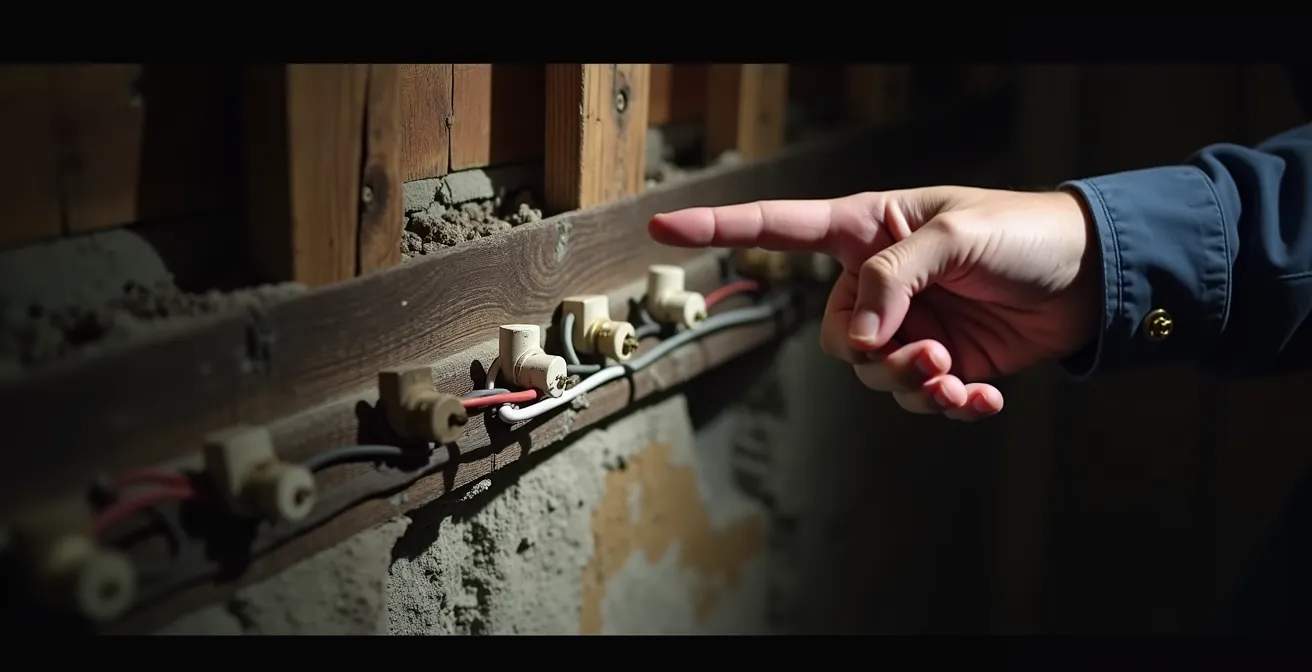
The only real solution is a complete removal and replacement by a licensed electrician, and the cost is significant. It’s an invasive process that often requires opening up walls and ceilings. According to current market rates, replacing K&T wiring can cost from $8,000 to $16,000 for a small home, and can exceed $25,000 for larger properties. This “heritage compliance debt” is a major hidden cost that must be factored into your purchase price and renovation budget. Trying to save money here is the most expensive mistake you can make.
How to Insulate a Brick Victorian Home Without Damaging the Facade?
In an era of rising energy costs, new owners of Toronto’s notoriously drafty Victorian homes are eager to improve insulation. However, applying modern insulation techniques to a historic double-wythe brick wall is a recipe for disaster. These walls were designed to “breathe”—they absorb moisture from the humid Toronto summers and release it. Installing a modern plastic vapour barrier on the interior traps this moisture within the brick, leading to a freeze-thaw cycle in winter that causes the brick faces to pop off (a phenomenon called spalling). This irreversible damage destroys the home’s facade and its value.
The guiding principle for insulating a heritage home is to maintain a “breathable building envelope.” This means avoiding any material that acts as a vapour barrier on the main walls. Instead of focusing on the walls first, the most effective and safest strategy is to heavily insulate the attic and air-seal the basement. This provides the greatest return on investment without risking the integrity of the historic masonry. Before any insulation work, it is paramount to ensure all external water sources are managed: fix the grading, clear the eaves, and extend downspouts to keep the foundation and walls as dry as possible.
If wall insulation is still desired after addressing the attic and basement, only breathable materials should be considered. This includes options like dense-pack cellulose or specialized wood-fibre boards, which allow moisture to pass through them. The cost-versus-risk analysis is clear: a small gain in wall R-value is not worth the catastrophic risk of facade damage.
This table breaks down the common insulation methods, highlighting the trade-off between cost, risk, and energy savings for a typical Toronto heritage home.
| Method | Cost per sq.ft. | Heritage Risk | Energy Savings |
|---|---|---|---|
| Attic insulation upgrade | $2-4 | None | 20-30% |
| Basement insulation | $3-5 | Minimal | 15-20% |
| Interior breathable boards | $8-12 | Low | 10-15% |
| Exterior insulation (AVOID) | $15-25 | Very High | 25-35% |
How to Access the Original Blueprints of Toronto’s Historic Estates?
For any serious renovation of a heritage property, the original architectural drawings are not just a historical curiosity—they are an invaluable strategic tool. Blueprints provide a map to the home’s original structure, revealing load-bearing walls, hidden fireplaces, and the architect’s original intent. This information is critical for preparing a heritage permit application that is both respectful of the building’s history and structurally sound.
But where do you find documents that are over a century old? It requires some detective work. Toronto is fortunate to have several rich archival resources. Your search should begin with the City of Toronto Archives, which holds building permit records dating back to the 1880s. While not always complete, these files often contain copies of the original plans submitted for construction. Another essential resource is the Toronto Public Library’s Baldwin Collection of Canadiana, which has a vast digital archive of architectural drawings and historical photographs.
As the City of Toronto’s own guidelines state, this process of discovery is part of the city’s mandate. The Official Plan directs that “potential and existing properties of cultural heritage value…will be identified and included in area planning studies,” which is why these records are preserved.
The City of Toronto’s Official Plan Policy 3.1.6.14 directs that potential and existing properties of cultural heritage value or interest, including cultural heritage landscapes and Heritage Conservation Districts, will be identified and included in area planning studies.
– City of Toronto, Heritage Register Guidelines
For reconstructing a property’s footprint and its relationship to the neighbourhood over time, the Goad’s Atlas fire insurance maps, available at the University of Toronto’s Map & Data Library, are indispensable. These colour-coded maps show building materials and layouts with incredible detail. Finally, don’t overlook local historical societies, like the Cabbagetown Preservation Association, which often hold neighbourhood-specific collections not found in larger institutions.
- Toronto Public Library Baldwin Collection: Access architectural drawings and property records through their digital archive.
- City of Toronto Archives: Search building permits and historical property records dating back to the 1880s.
- University of Toronto Map & Data Library: Consult Goad’s Atlas fire insurance maps to reconstruct original footprints.
- Local historical societies: Contact groups like the Cabbagetown Preservation Association for neighbourhood-specific archives.
- Archives of Ontario: Research provincial heritage property documentation for designated buildings of provincial significance.
Why Do Downtown Toronto Rents Fluctuate So Drastically in the Fall?
While it may seem like a topic for renters, the dramatic seasonal fluctuation of Toronto’s rental market holds a key insight for heritage homeowners, particularly those near the city’s universities. The fall academic cycle creates a massive, predictable surge in demand for rental units. For a heritage homeowner, understanding and leveraging this cycle can be the difference between a property that is a financial drain and one that is a profitable investment, but it must be done within the strict confines of city bylaws.
Many owners of large Victorian or Edwardian homes are tempted to create an illegal basement apartment or informally rent out rooms to students to generate income. This is an incredibly risky strategy. The City of Toronto actively penalizes illegal conversions, and more importantly, a standard insurance policy will not cover damages or liability related to an undeclared rental unit. The financial exposure is immense. The strategic approach is to pursue a legal secondary suite conversion, a process that, in a heritage home, requires navigating both zoning variances and the Heritage Permit process.
A successful case in The Annex demonstrates the potential. An owner of a large Victorian home undertook the eight-month, multi-permit process to convert their property into a legal duplex. While it required a significant upfront investment of approximately $15,000 in permits and architectural drawings alone, the outcome was transformative. By creating a legal, code-compliant second unit, they could charge full market rent, capitalize on the fall student rush, and, most critically, maintain full insurance coverage. Their neighbours with illegal units, meanwhile, live under the constant threat of city penalties and uninsured catastrophe.
This isn’t just about collecting rent; it’s about turning a potential liability into a city-sanctioned, insurable asset. The fall rental peak simply provides the powerful economic incentive to go through the proper, albeit arduous, process of legal conversion.
Key Takeaways
- A Heritage Permit is a non-negotiable legal requirement for almost any exterior alteration, and success depends on detailed, professional documentation.
- Standard insurance is insufficient. Heritage properties require specialized policies with riders for “Guaranteed Replacement Cost” to cover historically accurate materials and craftsmanship.
- Antiquated systems, especially knob-and-tube wiring, are not just outdated; they represent a severe fire hazard that can void insurance and require a five-figure investment for complete removal.
Buying Local Art in Toronto: How to Start a Collection on a $500 Budget?
After navigating the labyrinth of permits, insurance, and structural necessities, the desire to personalize your heritage home can feel overwhelming. With so many restrictions on permanent alterations, how do you make the space your own? The answer is often found not in renovation, but in decoration. Specifically, starting a collection of local Toronto art is one of the most effective and permit-free ways to infuse a historic interior with contemporary personality.
Art acts as a strategic design element. As one expert astutely noted, it allows you to modernize an interior without triggering the complex and costly heritage permit process.
Art serves as a ‘non-permanent fixture’ that allows heritage homeowners to modernize their interiors without triggering heritage permit requirements, making it the perfect solution for personalizing protected properties.
– Sarah Chen, Heritage Home Design Magazine
Starting a collection doesn’t require an enormous budget. Toronto has a vibrant and accessible art scene, with numerous avenues for acquiring original works for under $500. The key is to buy directly from emerging artists. Annual events like the OCAD University GradEx and The Artist Project are treasure troves for finding the next generation of talent before their prices escalate. The Toronto Outdoor Art Fair, held every July at Nathan Phillips Square, is another fantastic source, with hundreds of artists selling works in a wide range of prices.
For a year-round approach, exploring the open studio events at hubs like 401 Richmond or making a trip to Artscape Gibraltar Point on the Toronto Islands can lead to wonderful discoveries and direct connections with the artists. Building a collection of local art not only personalizes your home but also invests in the city’s creative ecosystem, making you a patron of Toronto’s culture, not just its architecture.
- Toronto Outdoor Art Fair (July): Find affordable original pieces from 350+ artists, with many works under $500.
- OCAD University GradEx (May): Purchase student works directly from emerging artists at their graduation exhibition.
- 401 Richmond Open Studios: Visit artist studios during quarterly events for direct purchases from a community of creators.
- Artscape Gibraltar Point: Access affordable works from artists-in-residence on the scenic Toronto Islands.
- The Artist Project (February): Browse a large exhibition of contemporary Canadian art, with dedicated sections for new and emerging artists.
To avoid turning your dream home into a financial liability, the most critical step is to engage with a heritage professional before you even make an offer. A pre-purchase consultation can uncover the Heritage Compliance Debt, assess the state of critical systems, and chart a realistic budget and timeline for turning a piece of Toronto’s history into your home.