Contrary to popular belief, the Casa Loma venue rental fee is just the starting point; the real cost lies in the 40%+ of mandatory fees, operational surcharges, and heritage logistics that most couples overlook.
- Mandatory “Landmark Fees” and ceremony charges can add over $8,000 before catering is even considered.
- The building’s historic nature imposes significant, unstated costs for vendor logistics, accessibility, and seasonal climate control.
Recommendation: Treat your Casa Loma budget not as a simple sum, but as an operational plan for a historic landmark, accounting for every logistical and preservation-related fee from day one.
Every Toronto couple who dreams of a fairy-tale wedding inevitably pictures Casa Loma. The soaring gothic towers, the opulent interiors, the sprawling gardens—it’s an undeniable fantasy. You see the initial venue rental fee and think, “Okay, it’s a splurge, but maybe we can make it work.” As a wedding planner in this city for over fifteen years, I can tell you that this is the first, and most dangerous, budgeting mistake couples make.
The common advice is to budget for the venue, catering, and florals. But a landmark heritage property isn’t a modern event hall. It operates under a completely different set of rules, restrictions, and financial realities. The final bill for a Casa Loma wedding isn’t inflated by the cost of champagne or canapés; it’s defined by a cascade of non-negotiable fees and logistical hurdles that are baked into the very stone of the castle. The true challenge isn’t affording the dream; it’s anticipating the cost of its reality.
But what if the key to a successful Casa Loma wedding budget wasn’t about finding savings, but about understanding the hidden operational costs that protect the venue itself? This guide will move beyond the brochure price list. We will dissect the mandatory surcharges, the logistical vendor challenges, the seasonal value traps, and the fine-print mistakes that can derail your day. This is the realistic, budget-aware briefing you need before you sign that contract.
This article provides a detailed breakdown of the often-overlooked expenses associated with hosting a wedding at Toronto’s most iconic venue. The following sections will guide you through each potential budget pitfall, ensuring you have a complete financial picture from the start.
Summary: Decoding the True Cost of a Casa Loma Wedding
- Why Do Historic Venues Charge a “Landmark Fee” on Catering?
- How to Manage Vendor Deliveries in a Heritage Building with No Freight Elevator?
- Summer Garden vs. Winter Conservatory: Which Wedding Date Offers Better Value?
- The Permit Mistake That Can Halt Your Wedding Photoshoot
- How to Ensure Grandma Can Access the Upper Floors of the Castle?
- When to Catch the Free Concerts at the Toronto Music Garden?
- The Cancellation Mistake That Costs You $100 Per Person
- Why Was Casa Loma Seized for Taxes Despite Sir Henry Pellatt’s Wealth?
Why Do Historic Venues Charge a “Landmark Fee” on Catering?
The first shock for many couples reviewing a Casa Loma quote isn’t the per-person catering cost, but the significant, non-negotiable fees listed separately. These aren’t optional add-ons; they are operational surcharges essential to the venue’s existence. The most prominent of these is the “Landmark Fee” or “Historic Preservation Fee.” This fee is not a gratuity, nor is it part of your food and beverage costs. It is a direct contribution to the immense, ongoing expense of maintaining a century-old national historic site.
Think of it as your share in preventing the castle from crumbling. The funds cover everything from specialized stone masonry and window restoration to the preservation of delicate wood panelling and antique fixtures. According to recent venue pricing data, this can include an $8,000 combination of a historical fee and a separate ceremony fee, applied before a single plate is served. This is a fundamental cost of getting married *in history*.
To put this in perspective, these fees are common among Toronto’s heritage venues, though the amounts vary. The key is to see them not as an unexpected tax, but as a core part of the rental you must budget for from day one. The table below illustrates how Casa Loma’s fee structure compares to other historic locations in the city.
| Venue | Venue Rental Range | Historic/Special Fees | Total Minimum Spend |
|---|---|---|---|
| Casa Loma | $5,000-$15,000 | $8,000 (historic + ceremony) | $37,000 |
| Distillery District Venues | $3,000-$10,000 | Varies by building | $25,000 |
| Royal Ontario Museum | $7,500-$20,000 | Included in rental | $40,000 |
Ultimately, this fee is the price of admission for an authentic castle experience. Factoring it into your initial calculations, rather than treating it as a surprise, is crucial for financial peace of mind.
How to Manage Vendor Deliveries in a Heritage Building with No Freight Elevator?
One of the biggest hidden costs at a heritage venue is not in a line item, but in time, labour, and stress. Casa Loma was built as a private residence in 1914, not a 21st-century event space. This means there is no freight elevator, no loading dock, and a labyrinth of narrow corridors and staircases. Every single piece of equipment—from the DJ’s speakers and the florist’s arches to the band’s drum kit and the photographer’s lighting—must be hand-carried through the same doors and hallways your guests will use.
This creates a massive logistical challenge that translates directly into costs. Vendors will charge more for a Casa Loma wedding because it requires more staff, more time, and more careful planning. A standard delivery becomes a complex operation. This “heritage logistics” premium is often buried in your vendors’ quotes. A failure to plan for these challenges can lead to expensive, last-minute disasters, as illustrated by one couple’s experience.
The Grand Piano That Didn’t Fit
A couple learned this lesson the hard way when their pianist’s baby grand couldn’t navigate the conservatory’s historic doorways. The venue’s beautiful but unforgiving architecture wasn’t designed for such items. The last-minute switch to a smaller upright piano cost them an additional $1,800 in cancellation fees for the original instrument, plus an emergency rental and union labour fee of $2,500 for the replacement. A nearly $4,300 mistake born from a simple oversight in measurements.
To avoid these costly errors, a meticulous logistics plan is not just recommended; it’s essential. Your planner must work with every vendor to coordinate load-in times, measure every piece of large equipment, and navigate the venue’s strict rules, which often include union labour requirements for heavy items.
Your Vendor Logistics Checklist for Casa Loma
- Confirm service elevator capacity (maximum 3 people) and the availability of a dedicated operator, booking it in advance.
- Schedule vendor load-in strictly after 5 PM, when the castle closes to tourists, to ensure clear access.
- Verify all large equipment (e.g., grand pianos, large floral installations) will fit through the Conservatory and Billiard Room doorways by taking precise measurements.
- Arrange for vendor parking permits for Davenport Road well in advance to avoid expensive tickets from the Toronto Parking Authority.
- Coordinate any union labour requirements for large or complex equipment directly through the Casa Loma venue coordinator to ensure compliance.
Failing to account for these heritage logistics won’t just cost you money; it can compromise the execution of your entire wedding day. Proactive planning is the only solution.
Summer Garden vs. Winter Conservatory: Which Wedding Date Offers Better Value?
Couples often assume a winter wedding is a surefire way to save money. At Casa Loma, this is a dangerous oversimplification. While the base venue rental fee may indeed be lower in the off-season, the “total cost of atmosphere” can easily erase those savings and even exceed a summer budget. Choosing a date is not about cost, but about understanding the trade-offs in seasonal value.
A summer wedding in the gardens leverages natural light and the beauty of the estate’s grounds, but it carries the significant risk of rain. This means you must budget for a rain-plan tent, a cost that can add thousands to your bill. Conversely, a winter wedding in the glass-roofed Conservatory or the elegant Library offers a guaranteed shield from the elements. However, with darkness falling as early as 4:30 PM in Toronto, you are now responsible for creating 100% of the ambiance. This requires a substantial investment in professional lighting—uplighting, pin-spotting, and candlelight—to prevent the grand spaces from feeling dark and cavernous.
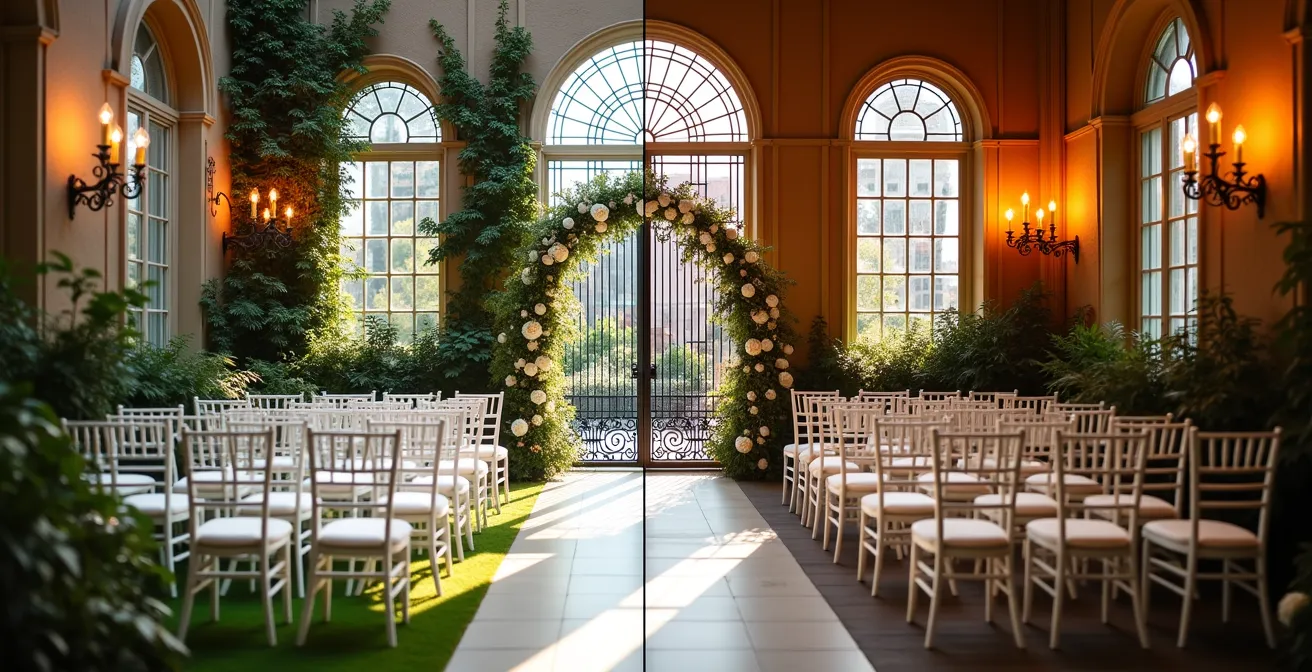
As the visual contrast shows, the vibe is entirely different, and so are the associated costs. Winter florals often carry a premium due to import costs, and essentials like a mandatory coat check add to the bottom line. The analysis below breaks down how these additional seasonal costs can shift the financial balance.
This detailed seasonal analysis reveals that a winter wedding is not inherently cheaper, but rather shifts your spending from contingency planning (tents) to atmosphere creation (lighting and heating).
| Cost Category | Summer (July) | Winter (February) | Shoulder (November) |
|---|---|---|---|
| Base Venue Fee | $15,000 | $10,000 | $11,250 (25% off) |
| Rain Plan Tent | $3,500 | N/A | N/A |
| Extra Lighting | $1,500 | $5,000+ | $3,500 |
| Coat Check | N/A | $800 | $500 |
| Climate Control | $1,200 (fans) | $2,000 (heating) | $500 |
| Floral Premium | Standard | +35% (imports) | +15% |
| Total Additional | $6,200 | $7,800+ | $4,500 |
Ultimately, the “best value” date depends on your priorities: the natural beauty and potential risk of summer, or the guaranteed comfort and higher atmospheric cost of winter. Choose with a full understanding of the financial trade-offs.
The Permit Mistake That Can Halt Your Wedding Photoshoot
One of the main reasons couples choose Casa Loma is for the epic wedding photos. What most don’t realize is that the right to take those photos is not automatically included in your venue rental agreement. Showing up with your photographer without the proper paperwork is a costly mistake that can bring your photoshoot to an abrupt and embarrassing halt in front of crowds of tourists.
Casa Loma is a public museum and tourist attraction first, and a wedding venue second. As such, professional photography is strictly controlled and requires a separate, paid permit. This is a non-negotiable policy. The mandatory photography permit fee ranges from $500 to $800 CAD for a two-hour session, depending on the day and time. This fee must be booked and paid for in advance, directly with the venue’s events department.
Furthermore, the permit process extends beyond the castle walls. Many iconic shots of Casa Loma are taken from the adjacent Spadina Park or the Baldwin Steps. These are public spaces managed by the City of Toronto, which requires its own separate photography permit and, critically, proof of liability insurance. Ignoring this can result in fines and being asked to leave by city officials. A truly professional wedding plan accounts for every single one of these administrative hurdles.
To ensure your photo session is seamless, you must secure all necessary permits and adhere to a strict set of rules:
- Secure the Venue Permit: Book and pay for your official Casa Loma photography permit as soon as you book your wedding. This is a separate transaction from your main venue contract.
- Apply for the City Permit: If you plan to take photos in the surrounding parks (like Spadina Park), you must apply for a City of Toronto Parks and Recreation permit, which has its own fee.
- Obtain Liability Insurance: The City of Toronto requires a certificate of liability insurance, typically for $2 million, before issuing a photography permit for its parks. Your planner can help arrange this.
- Schedule Around Tourists: For the most exclusive and intimate shots, schedule your photo session either before the castle opens (before 9 AM) or after it closes to the public (after 5 PM).
- Verify Drone Regulations: If you are considering aerial shots, your photographer must have a valid Advanced Operations Pilot Certificate from Transport Canada and get specific permission from the venue, as the area is restricted airspace.
Do not assume anything is included. Verify every detail, secure every permit, and you’ll be rewarded with the breathtaking photos you’ve dreamed of without any costly interruptions.
How to Ensure Grandma Can Access the Upper Floors of the Castle?
When you imagine your wedding at Casa Loma, you see your family celebrating with you throughout the magnificent rooms. But have you considered how your grandmother, or any guest with mobility challenges, will get from the Library reception to the Billiard Room or the Conservatory? In a historic building, accessibility is not a given—it’s a logistical problem that requires careful and often costly planning.
Casa Loma was not designed with modern accessibility standards in mind. While there is a small service elevator, it is not a public-use passenger elevator. Access is restricted, and its use requires advance booking and coordination with the venue. This is a crucial detail that is often overlooked until it’s too late. Ensuring all your loved ones can fully participate in your day requires a proactive “Accessibility Plan.”
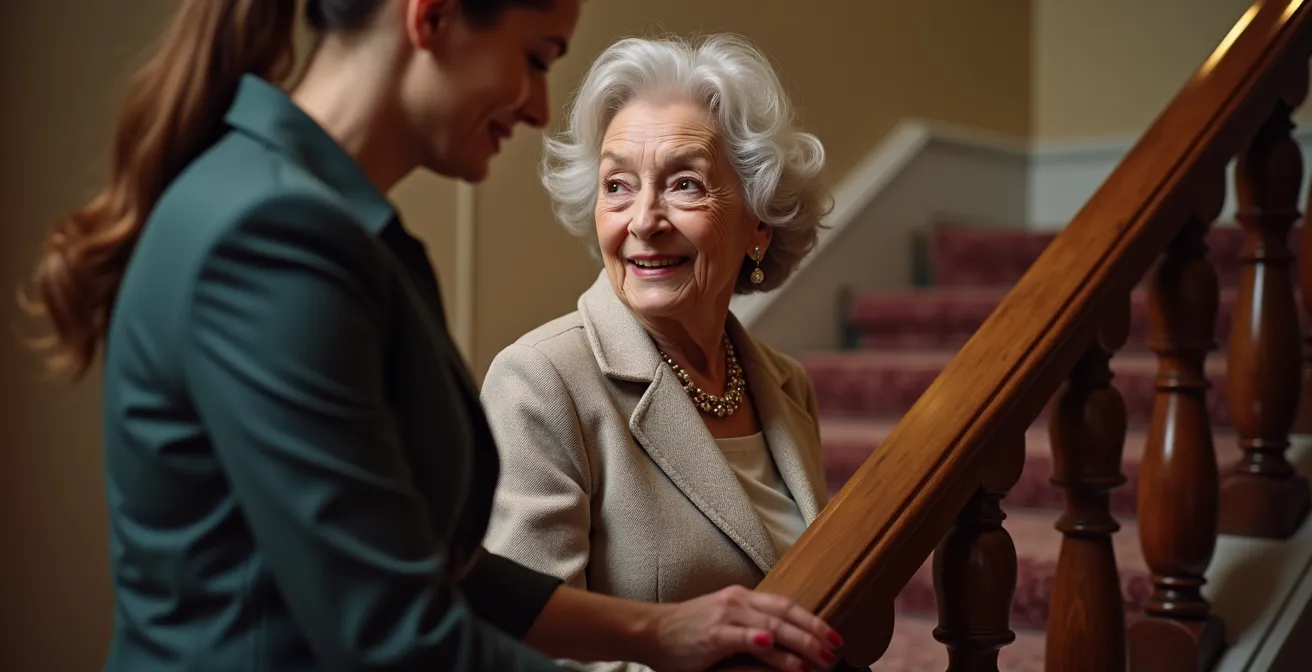
This plan goes beyond simply asking if the venue is “accessible.” It involves mapping out your guests’ entire journey through the venue and identifying every potential barrier, from single steps to long corridors. It’s about creating a seamless experience for everyone, which may involve additional costs for staff or equipment.
Creating Accessible Paths at a Historic Venue
The venue’s service elevator accommodates a maximum of only 3 people and requires booking a dedicated operator in advance. One couple, knowing their elderly relatives would struggle with the various levels, worked with their Toronto planner to find a solution. They successfully arranged for temporary ramps to be discreetly placed over the 3-step entrance to the Billiard Room and hired two professional attendants for $600. These attendants were tasked solely with assisting their older guests, ensuring they could navigate between all reception areas safely and with dignity.
The comfort and inclusion of your guests, especially those with mobility needs, is a hidden cost that is worth every penny. Don’t leave it to chance; make accessibility a dedicated part of your wedding plan.
When to Catch the Free Concerts at the Toronto Music Garden?
A seasoned Toronto planner knows that a successful event isn’t just about what happens inside the venue, but also about what’s happening *around* it. For Casa Loma, perched above the Annex, this means being aware of the city’s vibrant event schedule. A major festival or even a popular local concert can create unexpected noise, traffic, and access issues. One such event is the beloved “Summer Music in the Garden” series at the nearby Toronto Music Garden.
While not immediately adjacent, the ambient noise and increased traffic from these popular free concerts can impact an outdoor ceremony in Casa Loma’s gardens. However, with strategic planning, this potential conflict can be turned into a unique opportunity. The schedule is predictable, allowing you to plan around it or even incorporate it into your wedding weekend itinerary for out-of-town guests.
The Toronto Music Garden hosts 18 free performances featuring JUNO Award-winning Canadian musicians throughout summer, creating both an opportunity for guest entertainment and a potential noise consideration for nearby outdoor ceremonies.
– Harbourfront Centre Programming, Summer Music in the Garden 2024 Season Guide
Instead of viewing city events as a threat, an expert planner sees them as data points. By checking the local calendars, you can avoid conflicts and enhance your guests’ experience. Here’s how to conduct a strategic event conflict check for your Casa Loma wedding:
- Check the Music Garden Schedule: These free concerts typically run on Thursdays at 7 PM and Sundays at 4 PM from June to August. Verify the schedule on the Harbourfront Centre website.
- Monitor the Annex for Festivals: Keep an eye on major street festivals in the Annex or surrounding neighbourhoods that could cause significant road closures on Dupont or Spadina Avenue.
- Use the City’s Event Calendar: The official City of Toronto event calendar is your best source for information on parades, marathons, or other events that could disrupt traffic flow.
- Curate Guest Entertainment: If a free concert aligns with your wedding weekend, consider suggesting it to your out-of-town guests as a lovely, free pre-wedding activity.
- Schedule Your Ceremony Wisely: If you are planning an outdoor ceremony on a concert day, schedule it to conclude before the performance begins to avoid any potential sound bleed.
This “situational awareness” is a hidden aspect of wedding planning that doesn’t appear on an invoice but has a huge impact on the smooth flow of your wedding day.
The Cancellation Mistake That Costs You $100 Per Person
No one books a wedding planning to cancel it, but life happens. Understanding the cancellation policy of your venue is one of the most critical, and often overlooked, aspects of signing a contract. With a venue like Casa Loma, where minimum spends are substantial, a mistake in this area can be financially devastating. The penalties are not a flat fee; they are a percentage of your entire contracted minimum spend, which escalates dramatically as the date gets closer.
The second, and more common, mistake is the “final count guarantee.” Typically, 10-14 days before your wedding, you must provide the venue with your guaranteed final guest count. This is the number you will be billed for, even if fewer guests show up. If you guarantee 150 guests and only 140 attend, you still pay for all 150. With Casa Loma’s minimum wedding prices that range from $120 to $250 per person, overestimating your count by just 10 guests can be a $1,500 to $2,500 mistake—a cost for food and services that were never rendered. This is money that simply vanishes.
The financial risk is significant, and wedding insurance becomes a vital consideration. However, it’s crucial to know that most standard wedding insurance policies will *not* cover a loss due to a final count guarantee error. The cancellation penalty structure is unforgiving, as outlined below.
| Time Before Event | Penalty | Example (150 guests) | Insurance Coverage |
|---|---|---|---|
| More than 1 year | Loss of deposit | $5,000-$10,000 | Usually covered |
| 6-12 months | 50% of minimum spend | $18,500 | Covered with valid reason |
| Less than 6 months | 100% of minimum spend | $37,000 | Limited coverage |
| Final count guarantee error | Full F&B per person | $1,500 (10 no-shows) | Not covered |
Be conservative with your final count, chase down those last-minute RSVPs relentlessly, and understand every clause in your contract. This financial diligence is just as important as choosing your menu.
Key Takeaways
- The true cost of a Casa Loma wedding is often 40% or more above the base catering price due to mandatory fees.
- “Heritage Logistics”—covering vendor access, accessibility, and permits—are significant hidden costs requiring a specific plan.
- Seasonal “savings” are a trade-off; lower winter rental fees are often offset by high costs for lighting and florals.
- Budgeting for Casa Loma is about planning for the operational reality of a historic landmark, not just an event space.
Why Was Casa Loma Seized for Taxes Despite Sir Henry Pellatt’s Wealth?
To truly understand the cost structure of a Casa Loma wedding, you have to understand the story of the man who built it, Sir Henry Pellatt. At the turn of the 20th century, he was one of Canada’s wealthiest men. Yet, just a decade after completing his dream castle, he was forced to abandon it, buried under a mountain of debt. His downfall wasn’t a single catastrophic loss; it was the crushing weight of the castle’s operational costs—the very same reality that shapes your wedding budget today.
Pellatt’s annual property taxes soared, and the sheer cost of heating, staffing, and maintaining the 98-room mansion became unsustainable. This history is not just a quaint story; it is the direct reason for the modern “Landmark Fee” and the strict operational rules you’ll encounter. As the historical archives aptly put it, you are stepping into a piece of Toronto’s financial history.
Pellatt’s financial failure is why Casa Loma is now a city-owned museum, not a private home. This is the direct reason for today’s Landmark Fee and restrictions – you’re getting married in Toronto’s history.
– Casa Loma Historical Archives, Heritage Venue Guidelines
Every couple getting married at Casa Loma must contend with what I call the “Modern Pellatt Tax.” It’s not a single line item, but the cumulative effect of all the additional fees: the 13% HST, the 18% gratuity, the $5,000 historical fee, the $3,000 ceremony fee. These are the modern equivalent of Pellatt’s unsustainable operational costs. They can inflate your final bill by 40% or more, a shock to any unprepared budget.
The Modern Pellatt Tax: A Real-World Breakdown
A typical $30,000 food and beverage bill at Casa Loma does not end there. After adding 13% HST ($5,733 on the total), an 18% administrative fee/gratuity, the $5,000 historical fee, and the $3,000 ceremony fee, the final catering-related total balloons to nearly $50,000. Just like Sir Henry Pellatt, couples who only focus on the base price will find themselves overwhelmed by the operational costs required to bring the dream to life. The venue fee is only the beginning.
Budgeting for a Casa Loma wedding is about respecting its history and its operational reality. Acknowledge the “Modern Pellatt Tax” from the start, plan for it meticulously, and you can succeed where the castle’s original master failed, creating a magical day without the financial ruin.