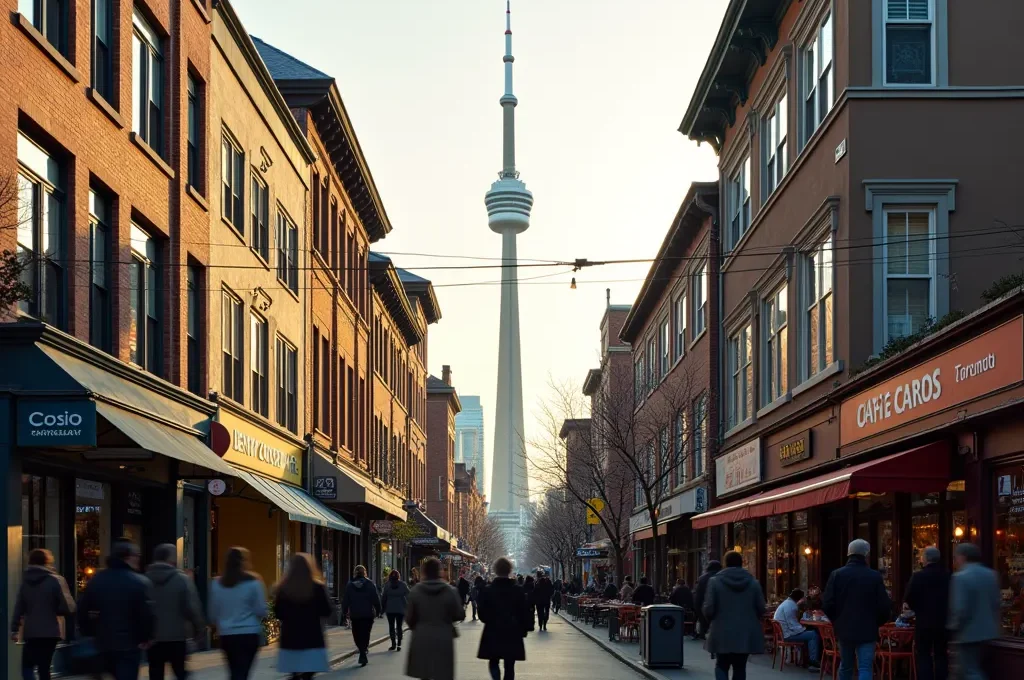
Choosing a Toronto neighbourhood is about decoding its living culture, not just its location.
- Neighbourhood identity is a dynamic “authenticity spectrum,” shaped by demographic tides and commercial forces.
- Your ideal community fit depends on daily “lifestyle rituals” like grocery shopping and dining, not just tourist attractions.
Recommendation: Approach your search like a cultural anthropologist—observe, compare, and match the neighbourhood’s rhythm to your own before deciding.
Finding your place in a city as vast and varied as Toronto is more than a real estate search; it’s a quest for belonging. Newcomers and long-time residents alike face a dizzying array of choices, each neighbourhood a universe unto itself. The common advice is to look at a map, pick a spot known for a certain culture—Greektown for souvlaki, Little India for sarees, Koreatown for BBQ—and hope for the best. This approach treats neighbourhoods like static museum exhibits, showcasing a fixed version of a culture.
But this misses the vibrant, evolving reality of Toronto. These communities are not monoliths. They are living ecosystems shaped by demographic tides, gentrification, and the subtle tension between first-generation tradition and modern fusion. The real question isn’t just “where is Chinatown?” but “which Chinatown—the historic, walkable downtown core or the sprawling suburban hubs of Scarborough and Markham—aligns with my daily life?” The key is to move beyond the tourist map and learn to read the city’s cultural cartography.
This guide offers a different perspective. As a cultural anthropologist advising on urban living, I’ll show you how to deconstruct Toronto’s multicultural landscape. We will explore the forces that shape neighbourhood identities, from the disappearance of traditional shops in Little Italy to the strategic fame of a peameal bacon sandwich. By understanding these dynamics, you can make an informed choice that truly fits your lifestyle, your palate, and your sense of community.
This article will guide you through the nuanced realities of Toronto’s most iconic cultural hubs. We will examine specific case studies and comparisons to equip you with the tools to find your perfect fit.
Summary: A Cultural Guide to Toronto’s Neighbourhoods
- Why Are Traditional Shops Disappearing from Little Italy?
- How to Find Authentic Dim Sum in Scarborough vs. Downtown Chinatown?
- Markham vs. Spadina: Where is the Better Asian Grocery Experience?
- The Respectful Visitor Mistake to Avoid During the Roncesvalles Polish Festival
- When is the Best Time to Visit the BAPS Shri Swaminarayan Mandir?
- House of Spice vs. Carlos’ House of Spice: Which Has Better Variety?
- Why is Carousel Bakery’s Peameal Sandwich World-Famous?
- Eating Organic in Kensington Market: How to Fill Your Basket for Under $60?
Why Are Traditional Shops Disappearing from Little Italy?
The romantic image of Toronto’s Little Italy, with its bustling bakeries and tailor shops, is a powerful one. Yet, a stroll down College Street today reveals a different story: trendy bars and global cuisine are more prominent than traditional Italian grocers. This transformation is not an accident; it’s a textbook example of a neighbourhood’s identity evolving beyond its original demographic roots. The phenomenon is rooted in powerful demographic tides. The neighbourhood’s character began to shift as the original community aged and moved to the suburbs, confirmed by census data revealing the Italian population dropped significantly over a 30-year period.
This demographic vacuum created a tension between perceived identity and residential reality. A fascinating case study from the University of Toronto sheds light on the mechanism behind this. It’s not just about population change; it’s also about strategic branding.
The BIA and the Marketing of Heritage
A University of Toronto study found that the Little Italy Business Improvement Area (BIA), established in 1985, actively markets the neighbourhood’s Italian heritage. This strategy functions as a powerful real estate tool, maintaining high property values by selling an “authentic” experience, even as the resident population has become a multicultural mix of Portuguese, Latin American, and Asian communities. The “Italian” identity is now a curated brand as much as a lived reality.
Understanding this “authenticity spectrum” is crucial for anyone considering living here. Are you looking for a neighbourhood of first-generation Italian families, or are you drawn to the romantic, European-style streetscape and vibrant nightlife that the heritage brand provides? The answer determines if Little Italy is the right fit.
| Period | Italian Population | Business Type | Community Focus |
|---|---|---|---|
| 1950s-1960s | 16,000+ residents | Bakeries, tailor shops, barber shops, small markets | Working-class Italian immigrants, construction workers |
| 2020s | Less than 13% Italian | Trendy restaurants, bars, nightlife venues | Multicultural mix: Portuguese, Latin American, Chinese, Vietnamese |
How to Find Authentic Dim Sum in Scarborough vs. Downtown Chinatown?
The search for “authentic” dim sum is a classic Toronto foodie quest, but the answer depends entirely on your definition of authenticity and, more importantly, your lifestyle. The choice between the sprawling culinary landscape of Scarborough and the historic downtown Chinatown on Spadina Avenue is a perfect illustration of how lifestyle rituals dictate neighbourhood choice. This isn’t just about food; it’s a decision between convenience, atmosphere, and accessibility.
Downtown Chinatown, centred around Spadina and Dundas, offers an experience rooted in walkability and density. It’s ideal for the adventurous foodie or student who relies on the TTC and wants to combine a meal with other city explorations. Here, you’ll find a mix of generations-old institutions and modern fusion spots, with a higher likelihood of English menus and service catering to a diverse clientele.
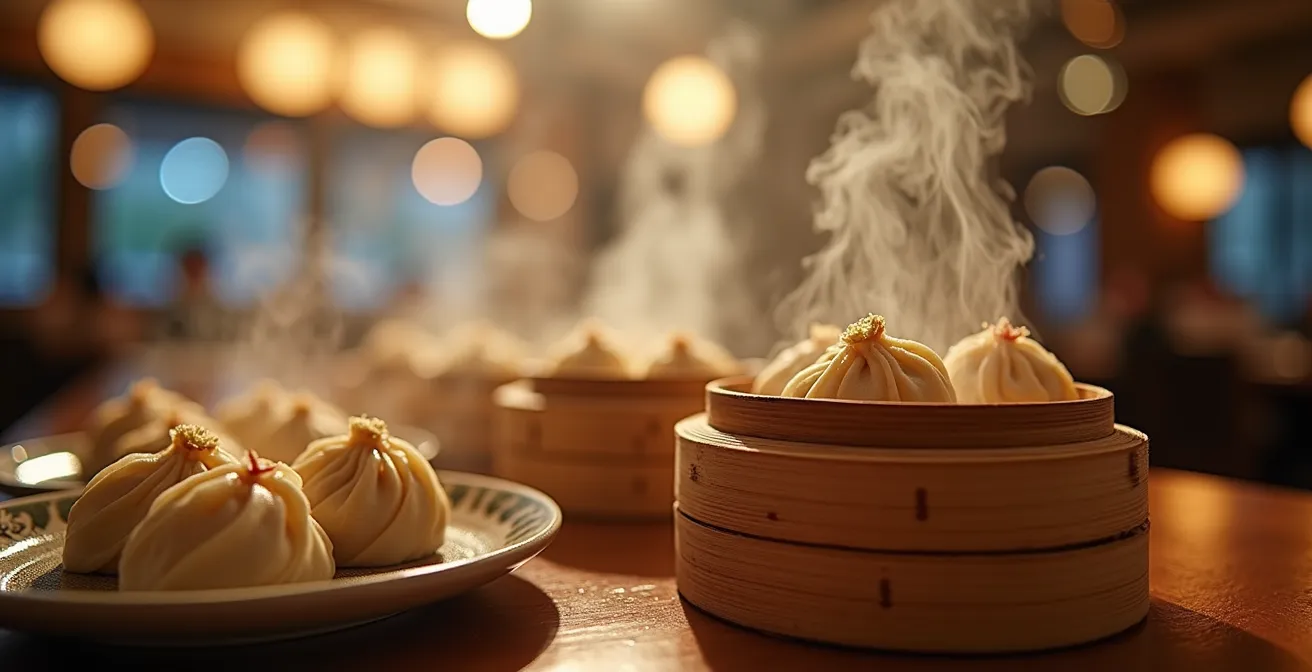
In contrast, the dim sum scene in Scarborough, particularly around the Midland and Finch corridor, is built for a different lifestyle. This is a suburban, car-centric experience. Restaurants are larger, parking is often free, and the atmosphere is geared towards multi-generational families gathering for a weekend tradition. The experience is often more immersive, with traditional push-cart service and menus that may offer fewer English translations, placing you directly in the pulse of a thriving Cantonese-speaking community.
Your choice depends on your personal “dim sum persona”:
- For Weekend Families: Scarborough wins with its ample free parking, large tables, and traditional cart service, often integrated into plazas with Asian supermarkets for a one-stop-shop experience.
- For Adventurous Foodies: Downtown Spadina/Dundas offers walkability, diverse price points from budget to upscale, and a mix of traditional and fusion options close to other city attractions.
- For Non-Cantonese Speakers: Downtown locations generally provide more English menus and explanatory service, making them more approachable for beginners.
Markham vs. Spadina: Where is the Better Asian Grocery Experience?
Beyond restaurants, the weekly grocery shop is one of the most fundamental lifestyle rituals that defines your connection to a neighbourhood. For those seeking Asian ingredients, Toronto offers two profoundly different experiences: the traditional street-level markets of Spadina’s Chinatown and the massive, all-in-one suburban shopping centres of Markham. Deciding which is “better” is a question of values: do you prioritize the efficiency of a modern mall or the sensory engagement of a traditional market?
Spadina Avenue preserves an old-world market atmosphere. Shopping here is an interactive journey, moving between specialized, often family-run vendors—one for fresh produce, another for butchered meats, a third for dried herbs and seafood. It’s a time-intensive process that requires navigating crowds and multiple transactions, but it rewards you with a deep sense of connection and the potential for discovering unique, single-origin products. This is sensory navigation at its finest, guided by the sights and smells of a bustling street market.
A Tale of Two Shopping Cultures
As detailed by local historians, this contrast represents two distinct eras of immigrant commercial settlement. Markham’s shopping centres like Pacific Mall offer a complete suburban experience. As one of the largest Asian indoor malls in North America, it features hundreds of stores under one roof, combining groceries with electronics, fashion, and food courts. This model prioritizes convenience, climate control, and one-stop shopping. In stark contrast, Spadina’s street-level shops preserve the traditional market culture, appealing to those who value authenticity and direct interaction with vendors over streamlined convenience.
Markham’s experience is about efficiency and scale. Large supermarkets like T&T offer vast selections, ample parking, and a standardized, predictable shopping environment. Spadina’s experience is about discovery and specialization. Your choice reflects your priorities: are you trying to get your shopping done in under an hour after work, or is the shopping trip itself a cherished part of your weekend routine?
The Respectful Visitor Mistake to Avoid During the Roncesvalles Polish Festival
Engaging with a neighbourhood’s culture goes beyond food and shopping; it involves participating in its celebrations. The Roncesvalles Polish Festival, North America’s largest, is a vibrant showcase of music, dance, and food. However, for an outsider, it’s easy to make the mistake of treating it as mere entertainment. The key to respectful participation is understanding that you are a guest at a celebration of deep cultural and religious heritage, not just a street party.
A common misstep is viewing traditions like the Polonaise dance as simply a performance for tourists. For the community, this dance represents centuries of Polish national pride and history. Likewise, the festival’s deep connection to St. Casimir’s Parish means many elements have a religious context. Observing parades or processions with quiet respect, rather than intrusive photography, is crucial. This awareness transforms your experience from that of a passive consumer to an appreciative guest.
Authentic engagement means supporting the culture directly. This involves distinguishing between mass-produced souvenirs and genuine Polish crafts like intricately decorated *pisanki* (Easter eggs) or symbolic amber jewelry. It also means making an effort with the language—learning to pronounce *pierogi* and *pączki* correctly and using a simple *Dziękuję* (thank you) shows immense respect to the first-generation vendors who are the heart of the festival.
Your Action Plan: Respectful Festival Participation
- Understand the Context: Recognize the festival’s connection to national pride, Catholic traditions, and St. Casimir’s Parish. You are witnessing cultural expression, not just a show.
- Support Authentic Artisans: Seek out genuine Polish crafts like pisanki or amber jewelry and ask about their symbolic meaning, distinguishing them from generic souvenirs.
- Practice Food Etiquette: Make an effort to pronounce food names like pierogi and pączki correctly and learn to say ‘Dziękuję’ (thank you) to vendors.
- Observe Dance Respectfully: Appreciate the Polonaise dance as a representation of national history, not just entertainment. Participate if invited, but do so with reverence.
- Ask for Photographic Permission: Always ask before taking close-up photos of individuals in traditional costumes or during religious processions.
When is the Best Time to Visit the BAPS Shri Swaminarayan Mandir?
Some cultural landmarks are not just community hubs, but profound spiritual centres that demand a different kind of engagement. The BAPS Shri Swaminarayan Mandir in northwest Toronto is a breathtaking piece of architecture, hand-carved in India from Italian marble and Turkish limestone. But deciding when to visit depends entirely on your intention. Are you seeking architectural wonder, spiritual peace, or vibrant cultural immersion? Your answer will guide you to the perfect time.
For those interested in architecture and peaceful contemplation, the best time is a weekday afternoon. Between 2 and 4 PM, the crowds are minimal, allowing you to appreciate the intricate carvings and serene atmosphere without rush. The natural light during these hours is also ideal for admiring the Mandir’s stunning details. Remember, while photography of the exterior is encouraged, it is strictly prohibited inside the main prayer hall to maintain its sanctity.

If your goal is a deeper spiritual or cultural experience, plan your visit around a ceremony or festival. The evening *Aarti* (prayer ceremony) is a powerful sensory experience, filled with the sounds of bells, chanting, and the scent of incense. To witness the community at its most vibrant, visit during major festivals like Diwali (the festival of lights) or Annakut (a food offering), but be prepared for very large crowds and limited parking. For an educational visit, mid-morning on a weekday provides ample time to explore the ‘Understanding Hinduism’ exhibition.
Here’s a quick guide based on your intent:
- For Architecture & Peace: Weekday afternoons (2-4 PM).
- For Spiritual Experience: Evening Aarti ceremony (check the official website for seasonal timings).
- For Cultural Immersion: Major festivals like Diwali.
- For Photography: “Golden hour” on a clear day for the exterior.
House of Spice vs. Carlos’ House of Spice: Which Has Better Variety?
Sometimes, the story of a neighbourhood’s evolution is encapsulated in a single business—or in this case, two. The tale of House of Spice and Carlos’ House of Spice is a fascinating micro-study of how cultural offerings adapt and diverge. Located in Kensington Market, these two shops, born from a family split, represent different points on the authenticity spectrum and cater to different lifestyle rituals. Asking which has “better” variety is the wrong question; the right one is, “which variety is better for *you*?”
The original House of Spice remains deeply rooted in its Kensington Market origins. It excels in bulk spices, particularly South Asian and Caribbean varieties, catering to serious home cooks and a walk-in clientele of locals and tourists who seek the raw, authentic market experience. This is the place for those who want to buy spices by weight and find specialty items like fresh roti skins.
A Toronto Business Legacy: The Spice Family Split
The story goes that after a family split, two distinct business philosophies emerged. The original House of Spice in Kensington Market doubled down on its identity as a traditional purveyor of bulk South Asian and Caribbean spices. Carlos’ House of Spice, located in a more residential setting, adopted a broader, more global approach. It began offering a wider range of packaged international goods, from British snacks to a vast selection of Trinidadian hot sauces, effectively catering to destination shoppers looking for a one-stop global pantry.
Carlos’ House of Spice, by contrast, targets the exploratory cook and the one-stop shopper. While still offering a solid spice selection, its strength lies in its curated collection of global packaged goods. It’s the place you go when you need a specific brand of Trinidadian hot sauce or a British chocolate bar alongside your masala mix. Its location outside the market’s core also makes it more accessible for those driving in for a specific purchase.
| Specialty Item | House of Spice (Original) | Carlos’ House of Spice |
|---|---|---|
| Bulk Spice Variety | 15+ types of chili powder | 8-10 types, more packaged options |
| Caribbean Specialties | Authentic Guyanese cassareep | Wider hot sauce selection |
| South Asian Items | Fresh roti skins, specialty masalas | More branded masala mixes |
| Best For | Serious home cooks, bulk buyers | Exploratory cooks, one-stop shopping |
Why is Carousel Bakery’s Peameal Sandwich World-Famous?
In a city of complex, global flavours, how did a simple sandwich of cured pork loin on a bun become a world-famous culinary icon? The story of Carousel Bakery’s peameal bacon sandwich is a masterclass in how location, media, and simplicity can create an unshakeable cultural landmark. Understanding its fame is to understand the power of context in creating authenticity.
First, what is peameal bacon? Unlike streaky bacon, it’s a lean, unsmoked pork loin that’s been wet-cured and traditionally rolled in ground yellow peas (now cornmeal) to preserve it. Carousel Bakery’s version is deceptively simple: thick-cut slices of juicy, pan-fried peameal on a soft country bun, with optional mustard. Its magic lies not in complexity, but in its perfection of a humble, local ingredient.
Carousel Bakery’s Rise as Toronto’s Culinary Ambassador
Carousel Bakery’s ascent to global fame was no accident. Its prime location in the St. Lawrence Market, itself a National Historic Site, lends it immediate prestige. This was amplified by strategic appearances on Food Network shows and glowing endorsements from celebrity chefs. The sandwich became a “must-do” Toronto experience, a simple and authentic ritual in a sea of complex food trends. For both tourists and locals, it’s a non-negotiable part of any visit to the market.
The experience of getting the sandwich has become a lifestyle ritual in itself. The long, snaking queue on a Saturday morning is part of the tradition, a moment of shared anticipation. It’s a social phenomenon as much as a culinary one.
- The Ritual: Arrive on a Saturday morning for the full, bustling market atmosphere, but be prepared for a 20-30 minute wait.
- The Order: Order like a local. Keep it simple with just the sandwich and maybe some mustard.
- The Experience: Combine it with a market tour. Grab your sandwich and explore the market’s 120+ other vendors while you eat.
- The Pro Tip: The line itself is an iconic photo-op. Afterwards, buy some uncooked peameal bacon from a market butcher to try making it at home.
Key Takeaways
- Neighbourhood identity is not static; it’s an evolving blend of demographic reality and strategic “heritage” marketing.
- Your best community fit is determined by aligning your daily “lifestyle rituals” (like dining and grocery shopping) with a neighbourhood’s offerings.
- True cultural engagement requires moving from a consumer to a respectful observer, understanding the context behind festivals, traditions, and sacred spaces.
Eating Organic in Kensington Market: How to Fill Your Basket for Under $60?
Kensington Market stands as a testament to Toronto’s multicultural, bohemian soul. It’s a National Historic Site, but one that buzzes with the energy of a living, breathing marketplace. For the health-conscious and budget-minded resident, it presents a delicious challenge: can you fill a basket with high-quality, organic food for a reasonable price? The answer is a resounding yes, if you know how to navigate its eclectic mix of vendors with a strategic shopping plan.
The key to success in the “Kensington Challenge” is to abandon the one-stop-shop mentality of a supermarket. Instead, you must embrace the market’s specialization. Your route should be a curated journey, stopping at different vendors for each category of food. This method not only saves money but also connects you directly with knowledgeable shopkeepers, from cheesemongers to butchers.
A successful organic run for under $60 requires a route. Here is a proven path:
- Stop 1 – Essence of Life Organics: Start here for your base of seasonal organic greens and herbs. ($8-10)
- Stop 2 – 4 Life Natural Foods: Head here for bulk items. Load up on organic quinoa, lentils, and nuts by weight to save on packaging. ($10-12)
- Stop 3 – Global Cheese Shoppe: Pick up a 200g block of local, organic cheese. Ask for their recommendation on the best value. ($12-15)
- Stop 4 – European Quality Meats: Get a 500g package of organic chicken thighs or another protein. ($10-12)
- Stop 5 – Kensington Fruit Market: Finish your trip with a selection of seasonal organic fruits. ($8-10)
To maximize value, seasonality is your best friend. Building your meals around what is currently being harvested in Ontario will always be the most affordable and flavourful option. A pro secret is to visit after 5 PM, when some produce vendors offer discounts on perishable items to clear them out before closing.
| Season | Best Value Items | Local Source | Price Range |
|---|---|---|---|
| Spring | Asparagus, rhubarb, greens | Ontario farms | $3-5/bunch |
| Summer | Tomatoes, corn, berries | Niagara region | $2-4/lb |
| Fall | Squash, apples, root vegetables | Holland Marsh | $1-3/lb |
| Winter | Stored roots, greenhouse greens | Indoor farms | $4-6/lb |
Ultimately, finding your neighbourhood in Toronto is an active process of discovery. It requires you to look past the labels and see the living stories, the daily rituals, and the subtle cultural currents that define a place. By applying this anthropological lens, you transform your search from a stressful decision into an exciting exploration of the city itself. The perfect neighbourhood is not just an address; it’s the place where your personal lifestyle finds its rhythm.